JustCook
Pre-portioned boxes and an adaptive planning app that turn “I should eat better” into a balanced dinner in twenty minutes.
- Role
- End-to-end UX designer
- Team
- 4 design students
- Timeline
- Sep 2024 – May 2025
Overview
Problem
Off-site students want to eat well, but time, budget and family-sized packs get in the way.
Approach
Research in students’ own kitchens, six reframing cycles, then a value proposition map.
Outcome
Single-portion boxes paired with a planning app, plus brand, packaging and launch campaign.
- Role
- End-to-end UX designer
- Timeline
- Sep 2024 – May 2025
- Team
- 4 design students
- Type
- Product & communication design
- Platform
- iOS app + physical box
- Tools
- Figma, Miro
Result
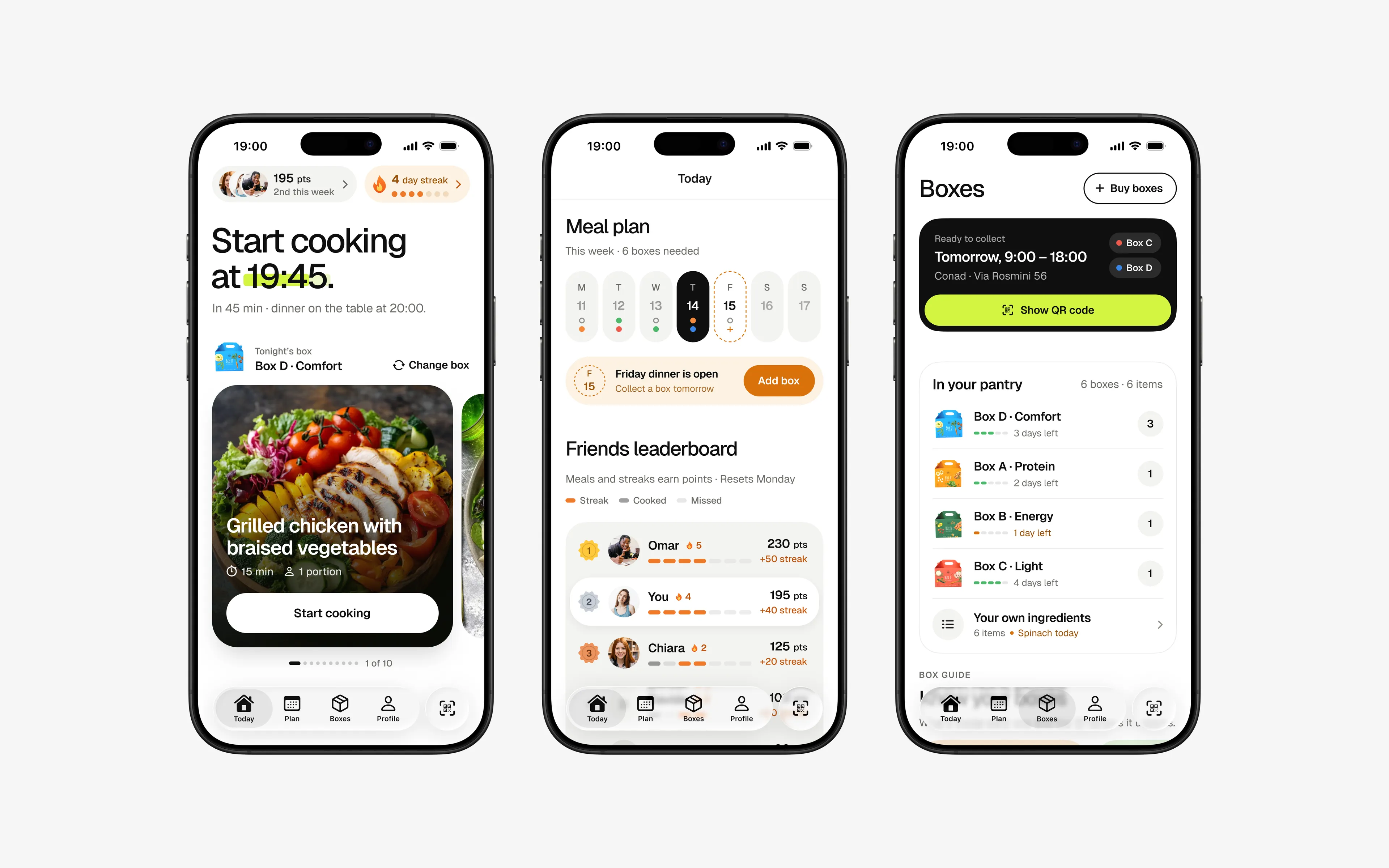
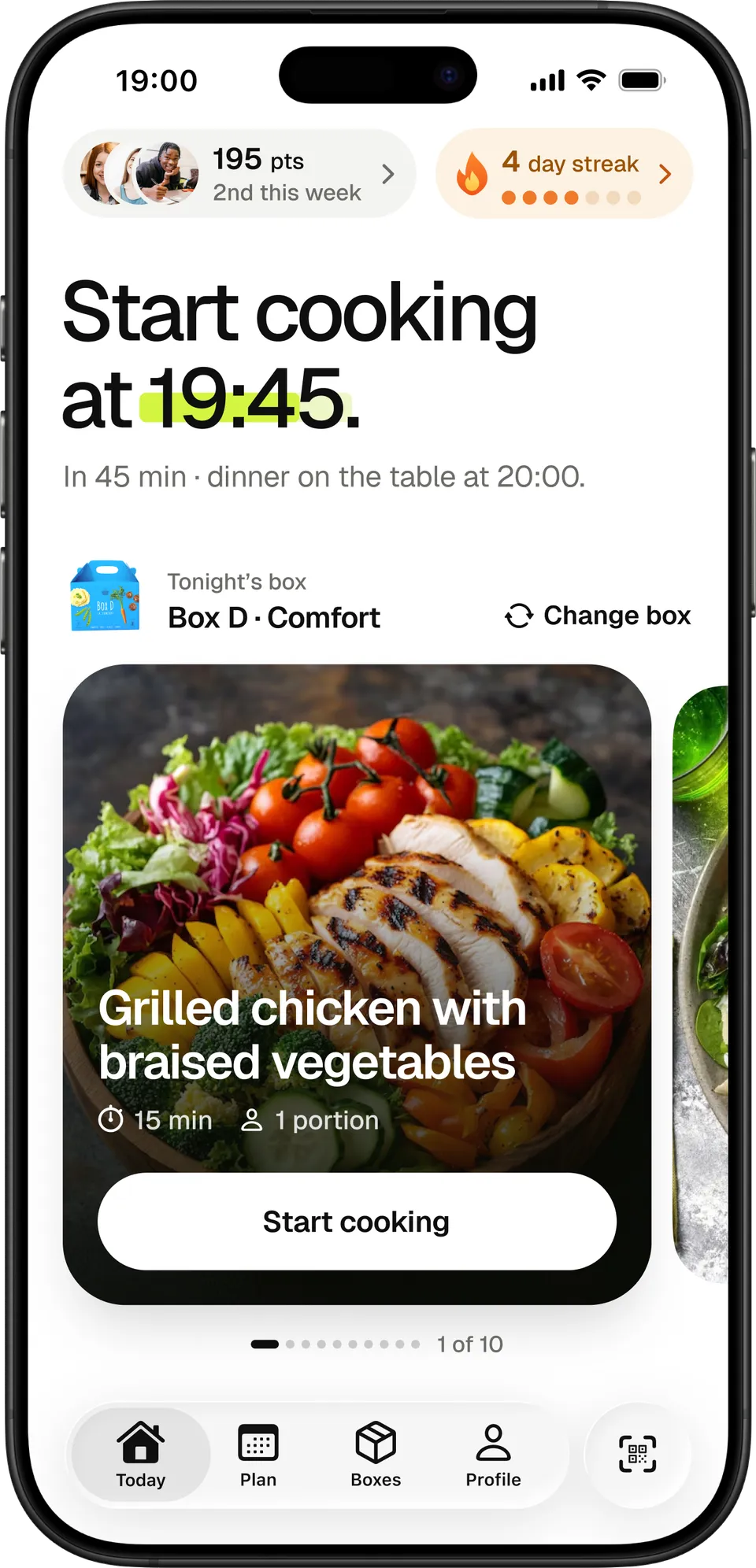
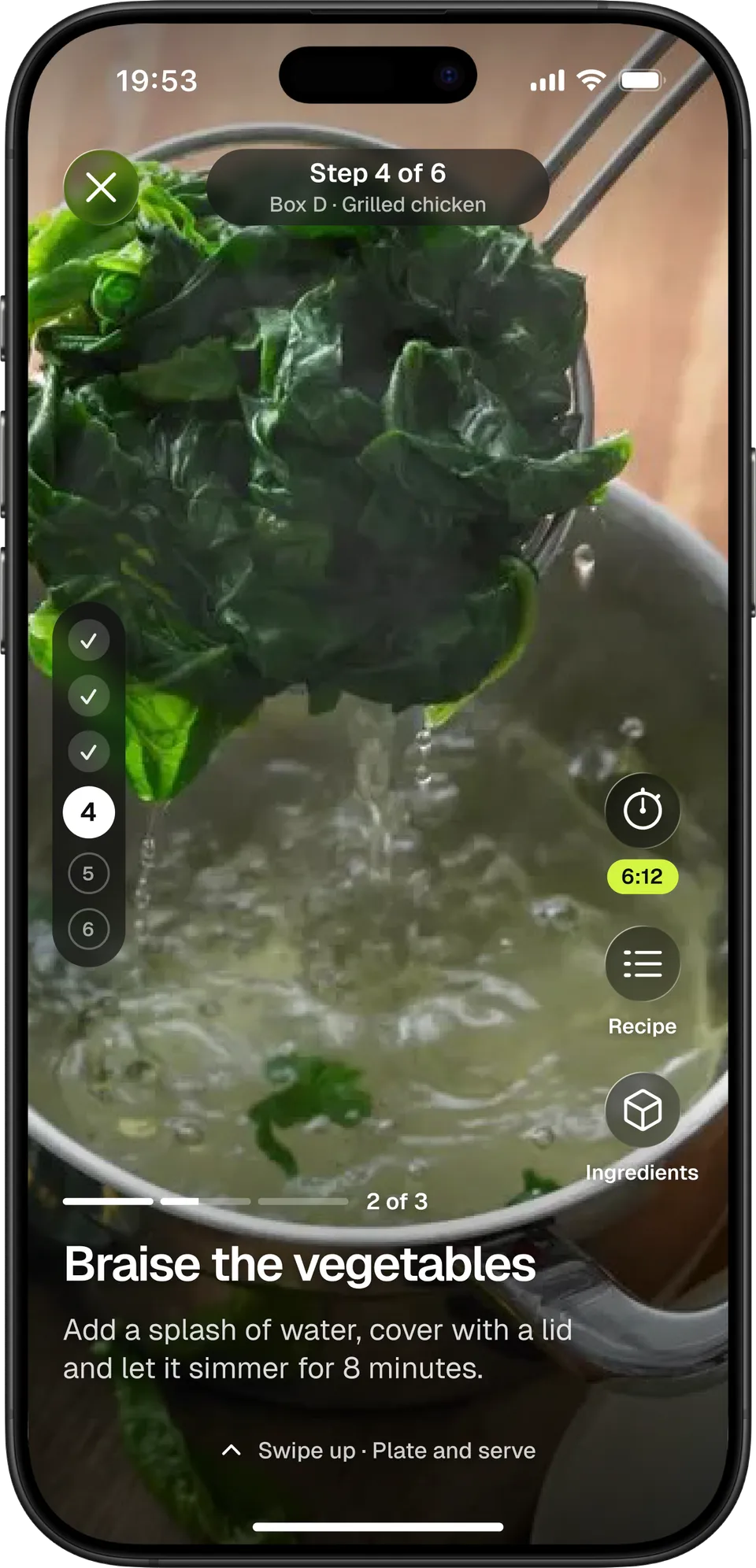
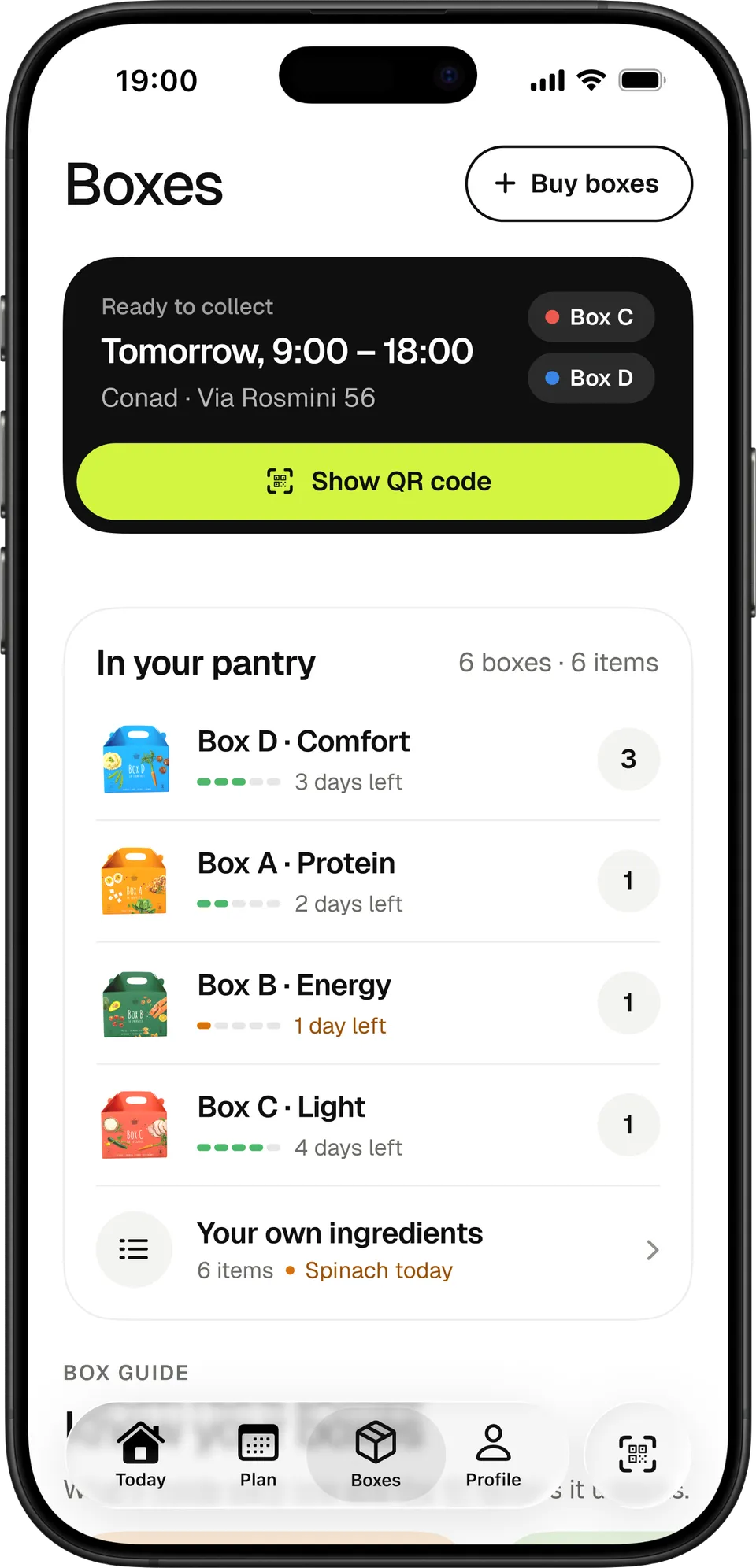
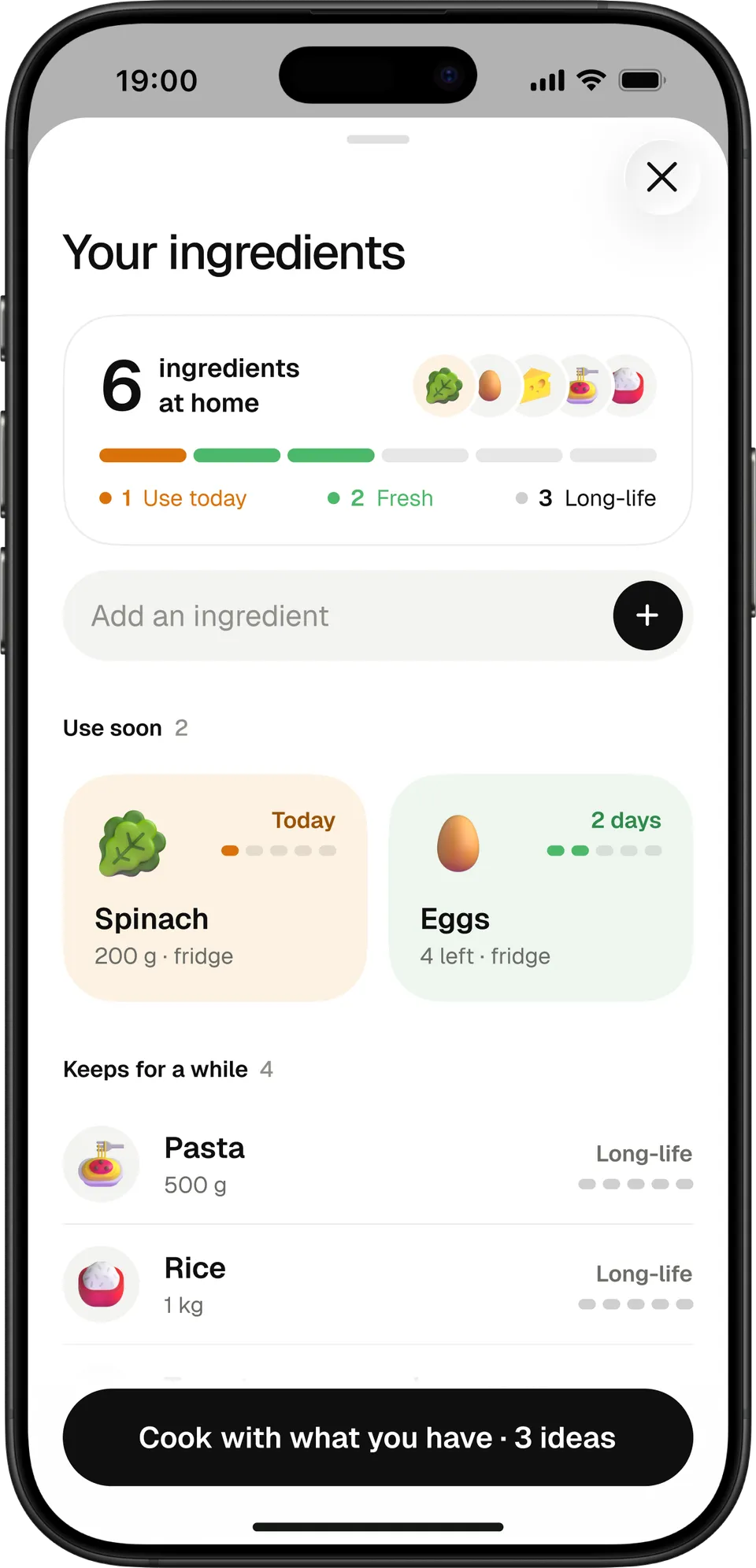
Four pre-dosed boxes cover the week; the app plans around the days students actually cook and nudges them before a delivery app wins.
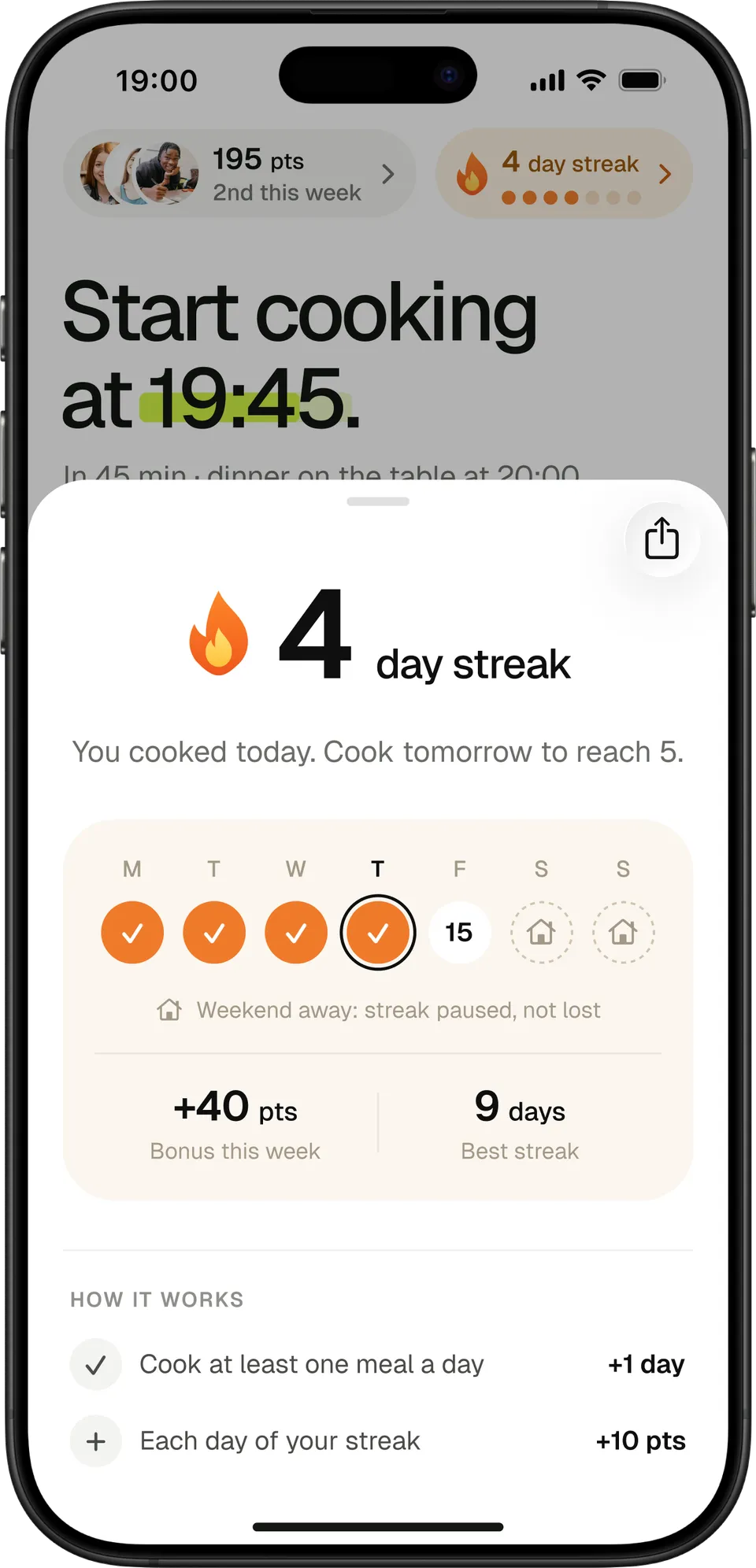
01Tonight
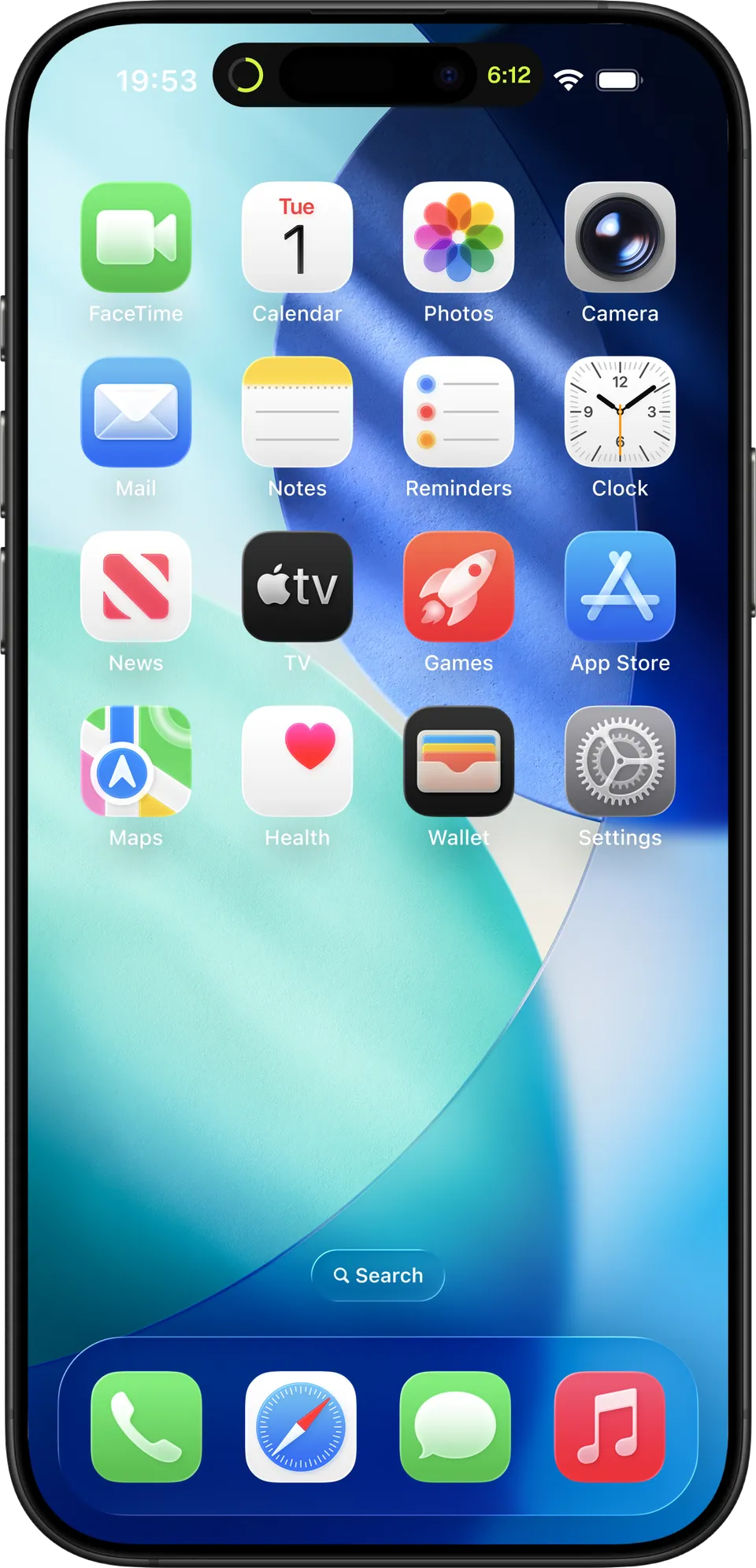
02Live Activity
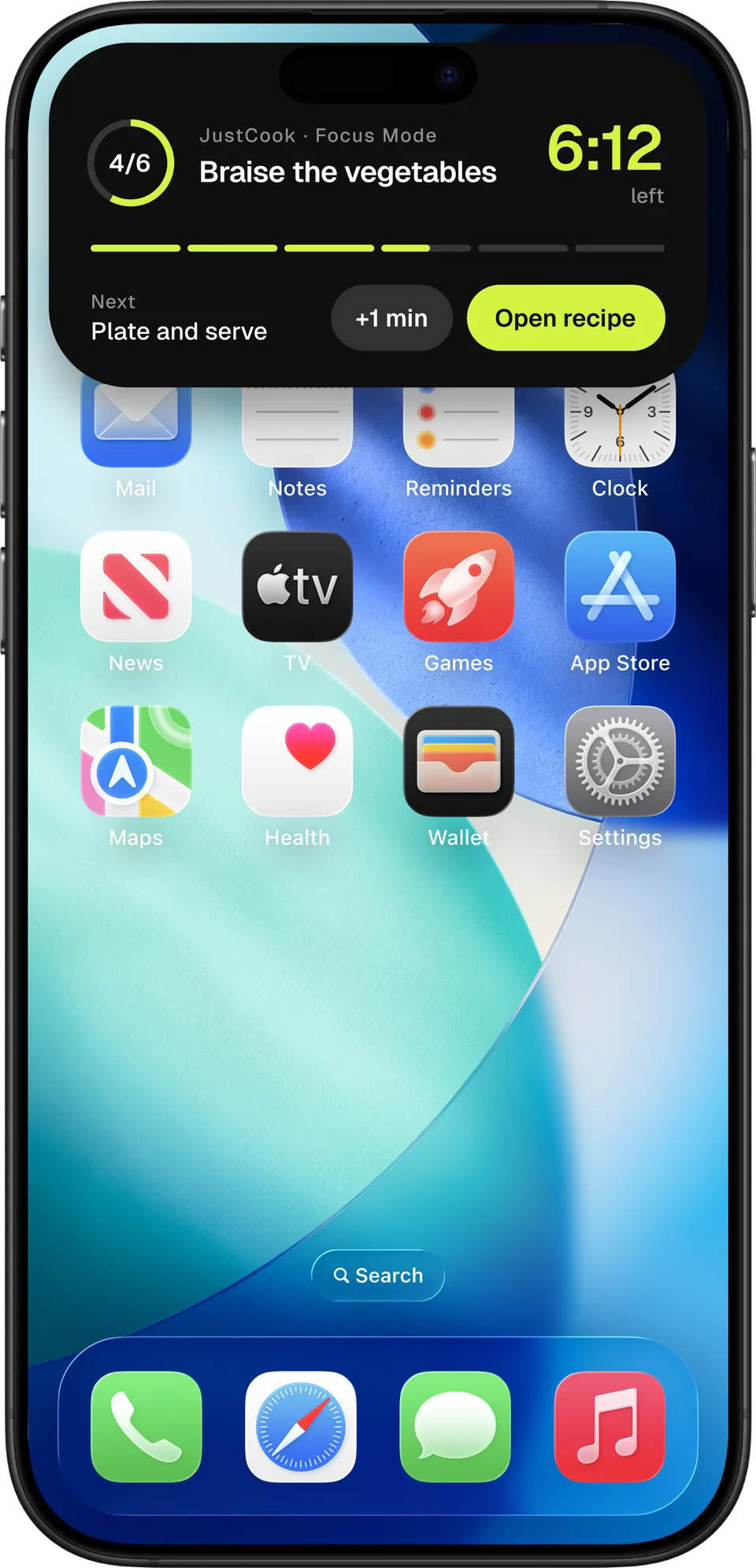
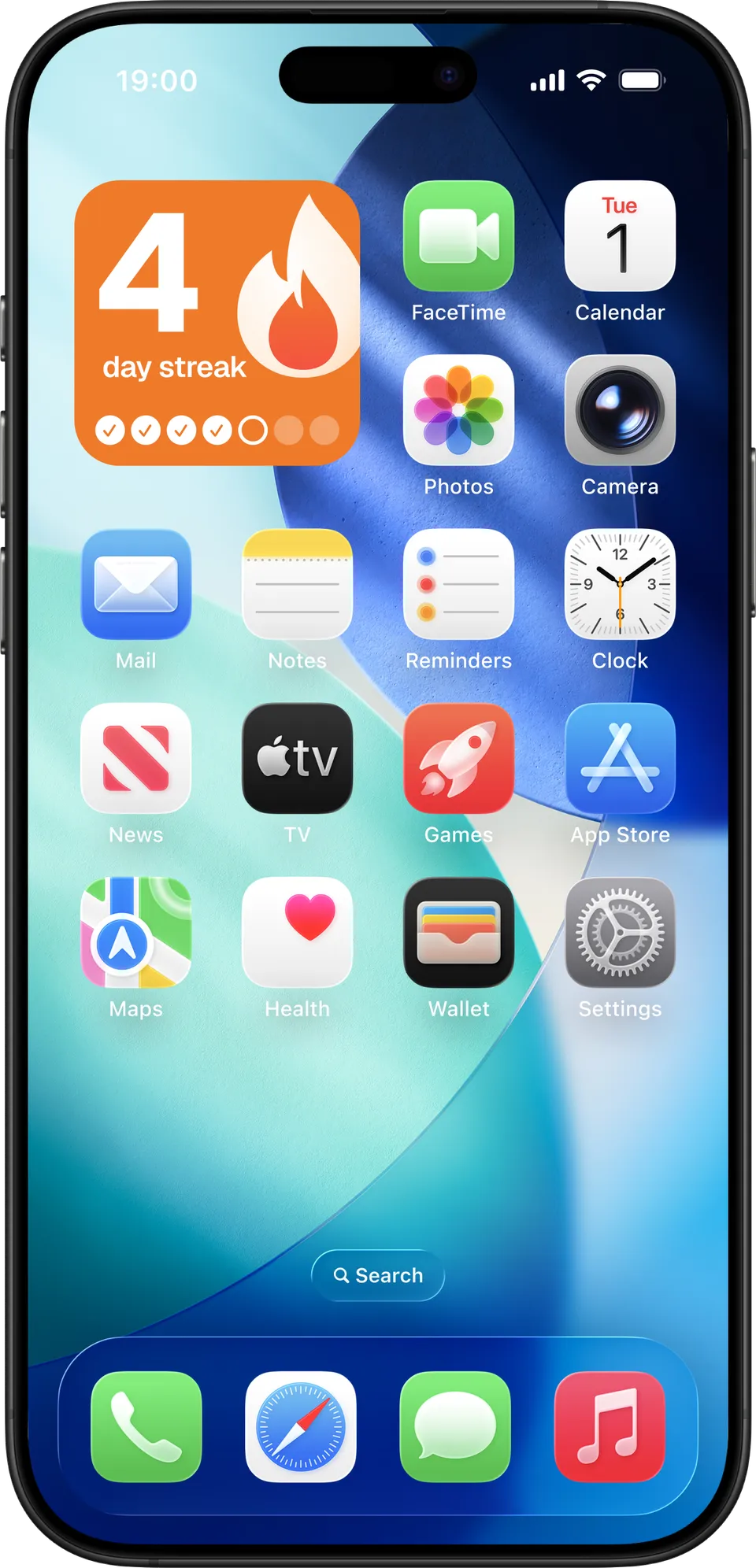
03Widgets
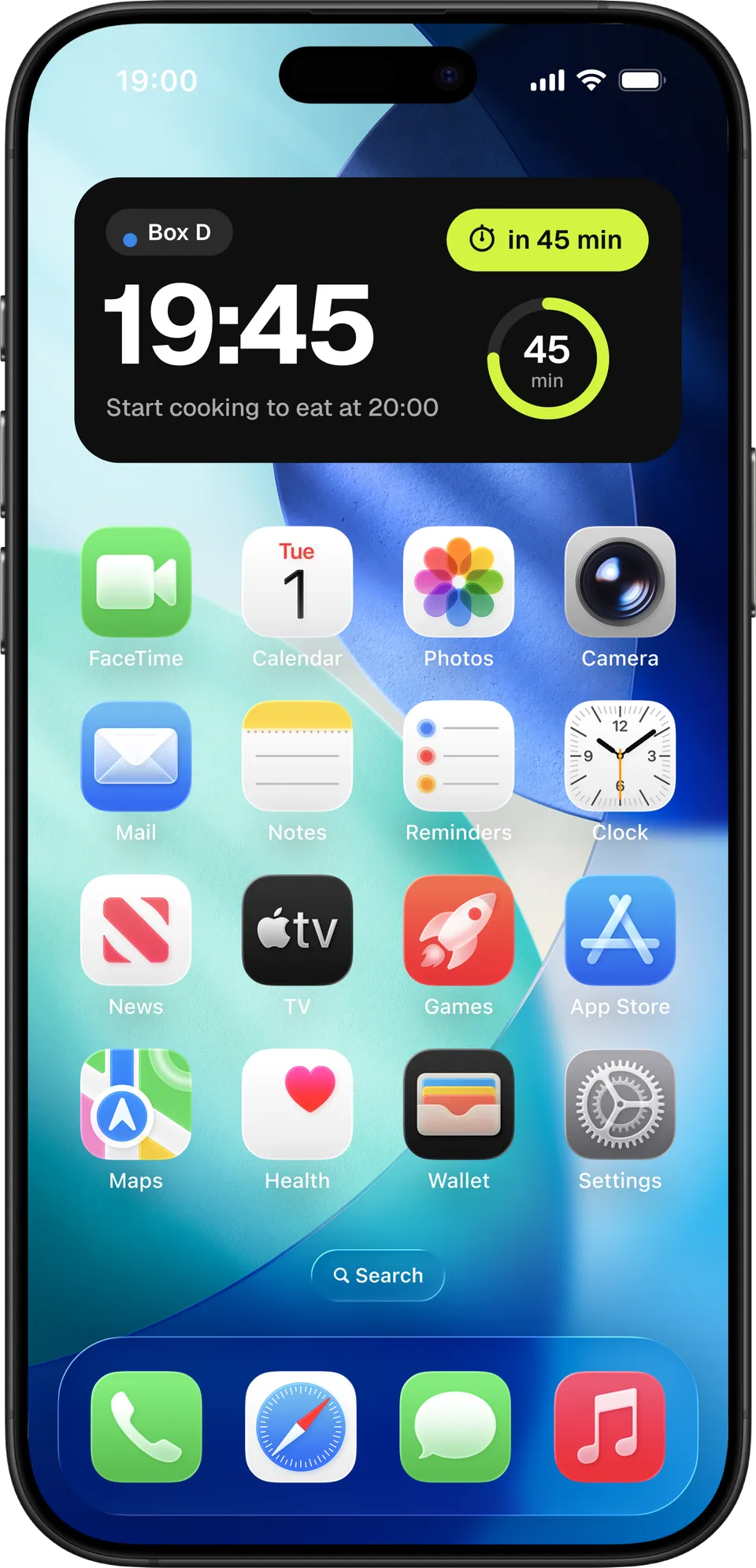
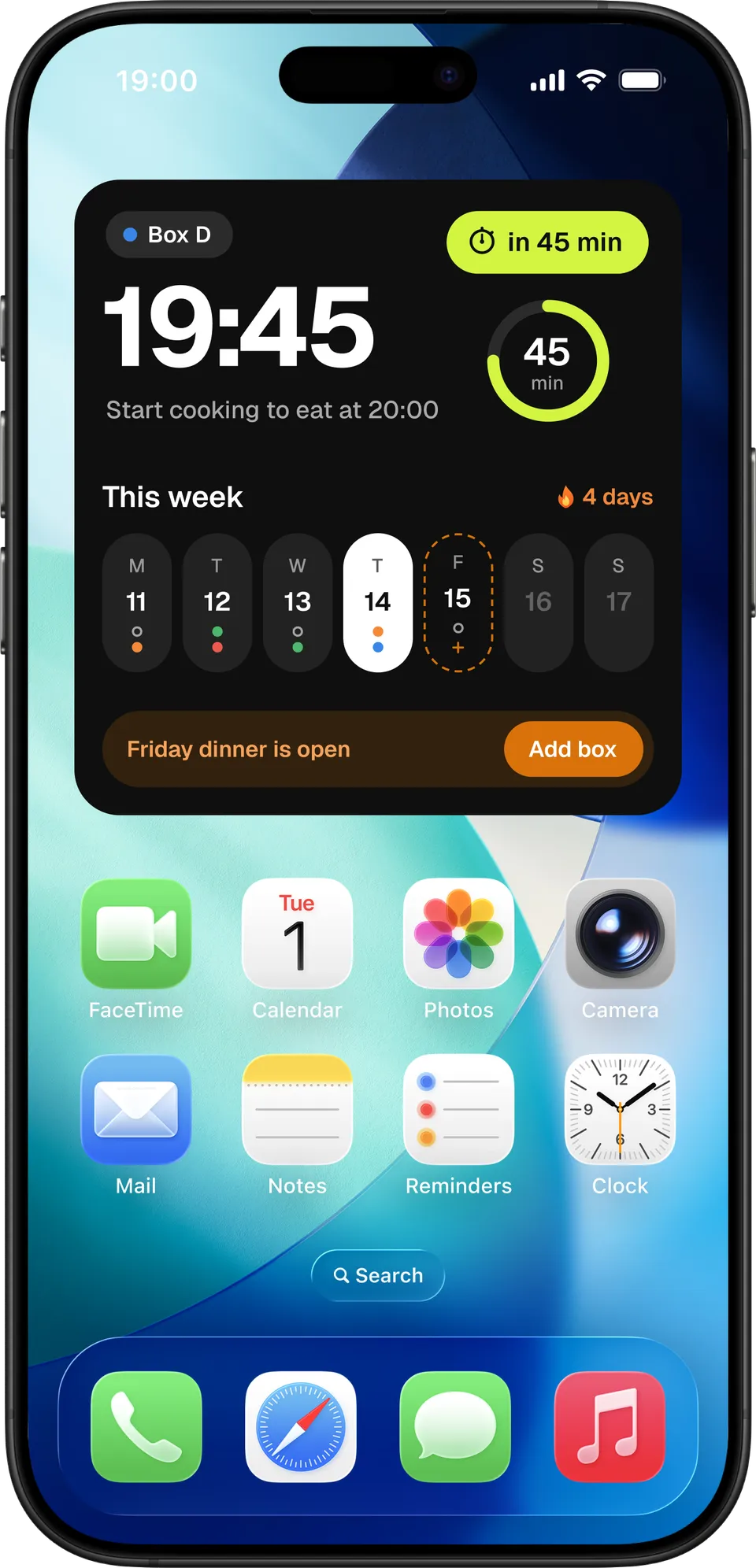
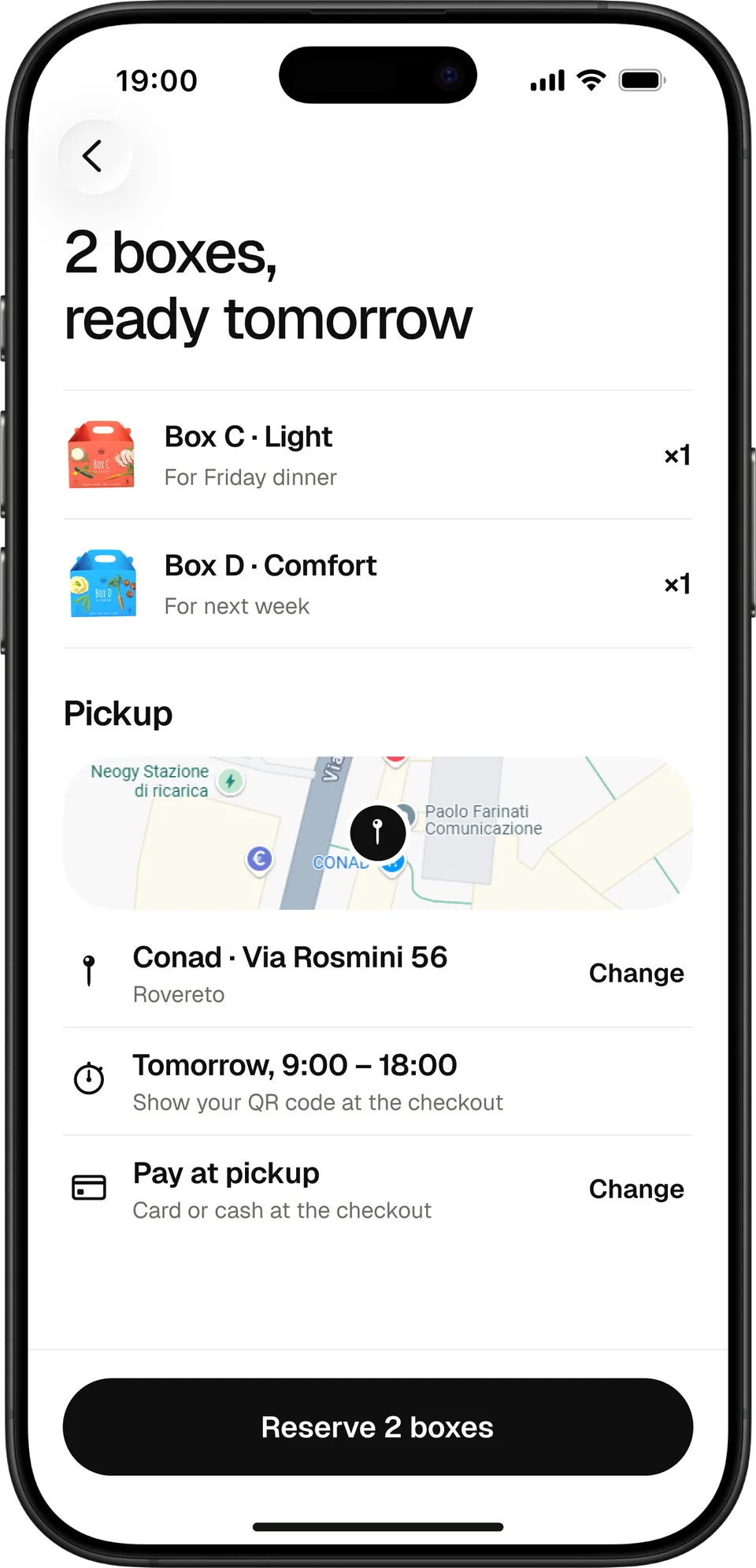
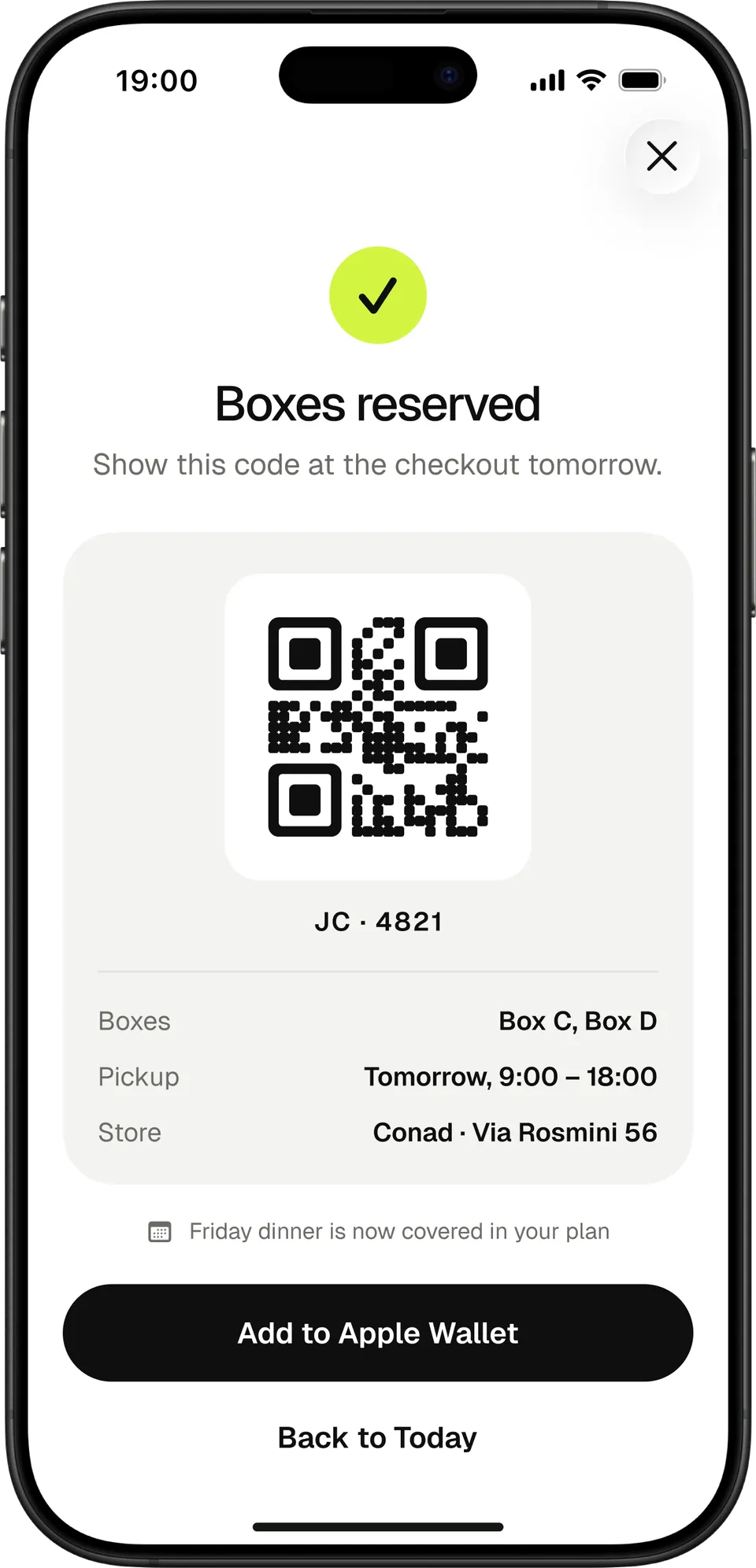
04Buy boxes
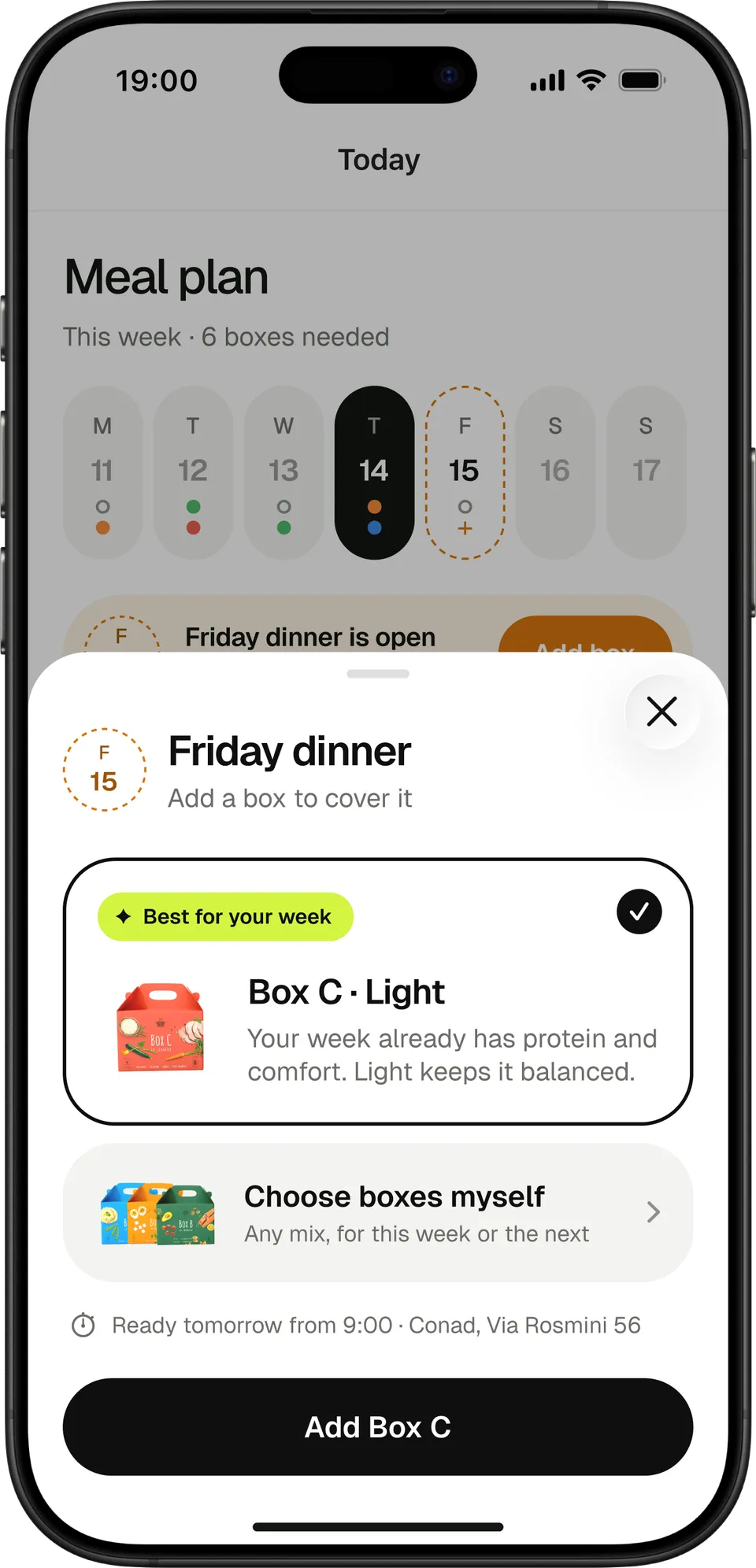
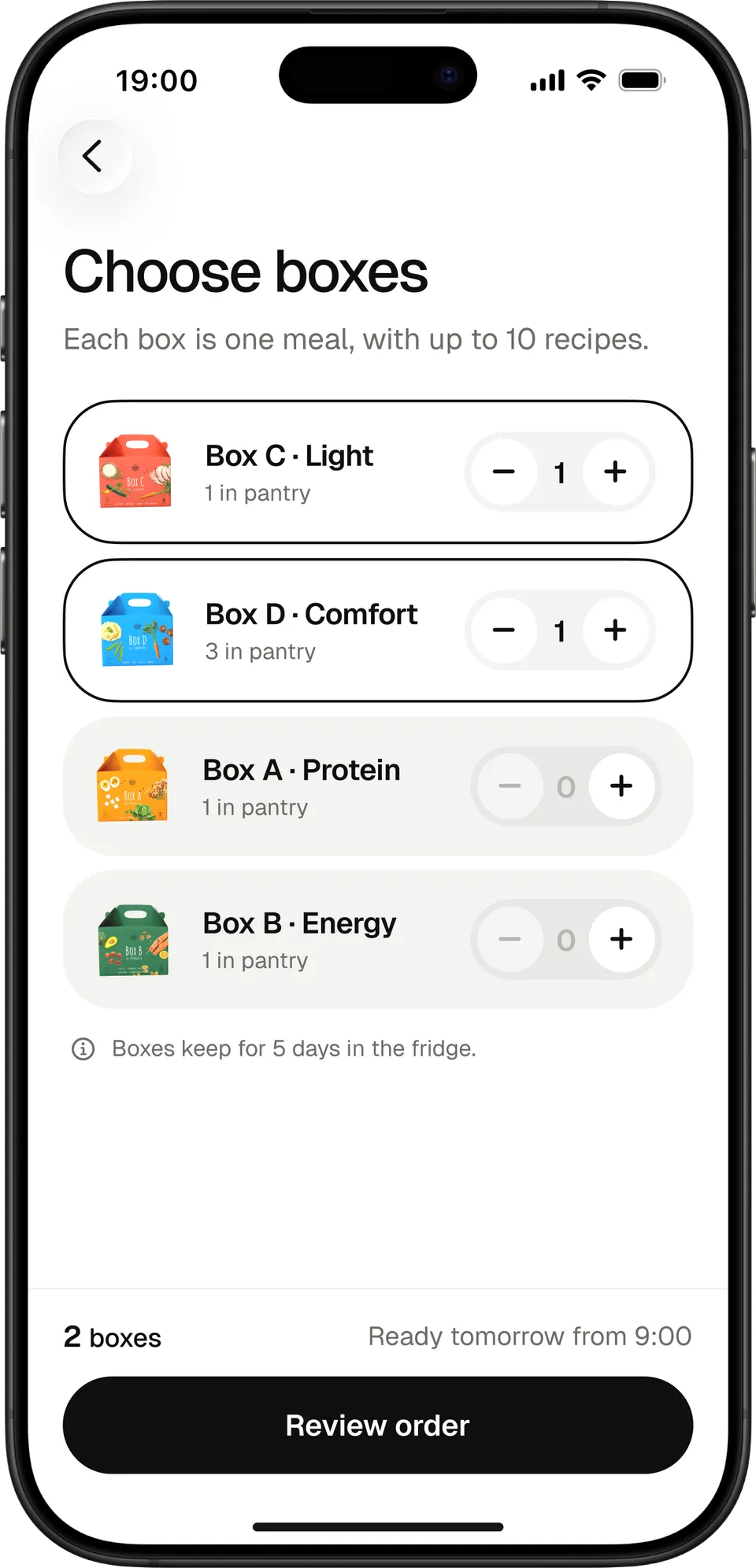
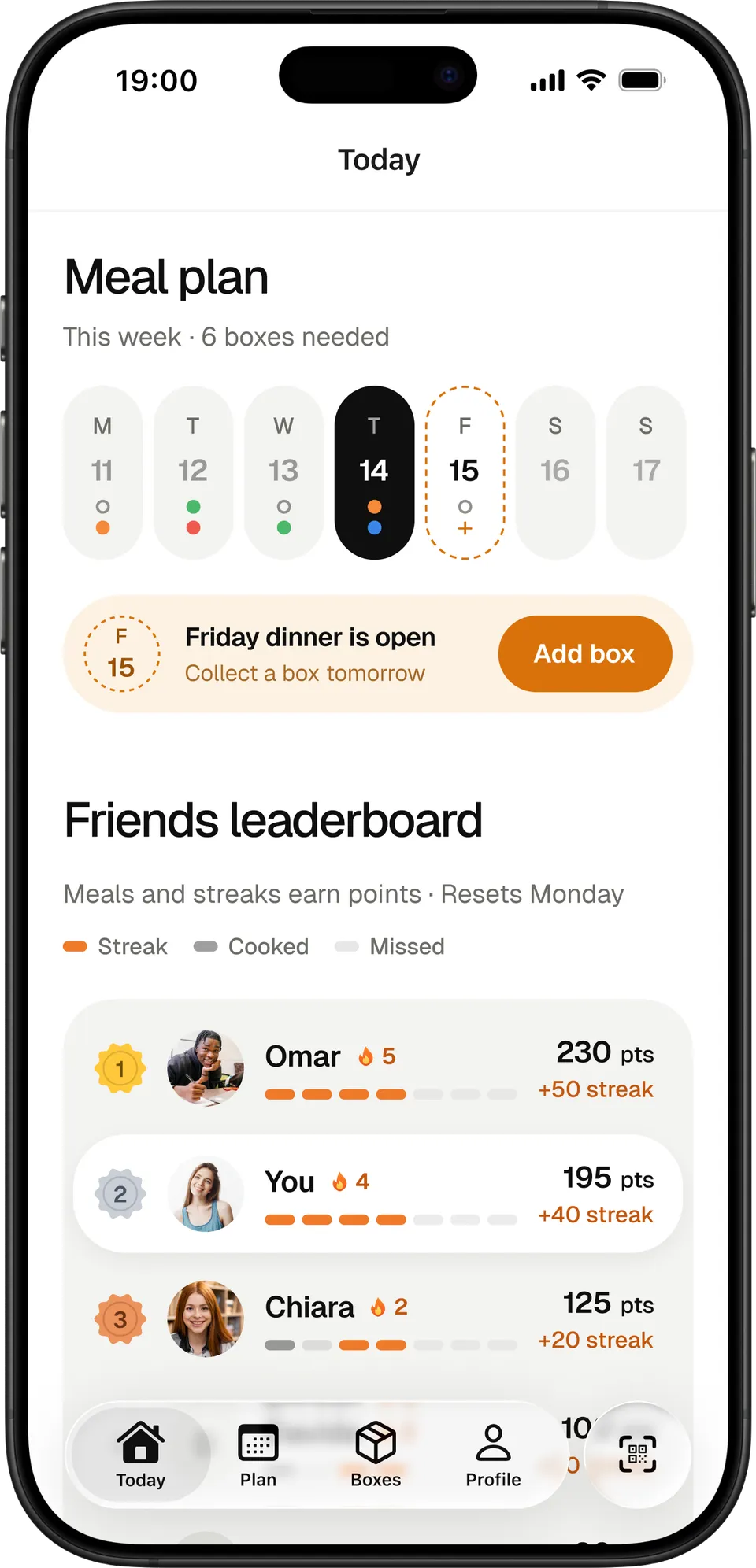
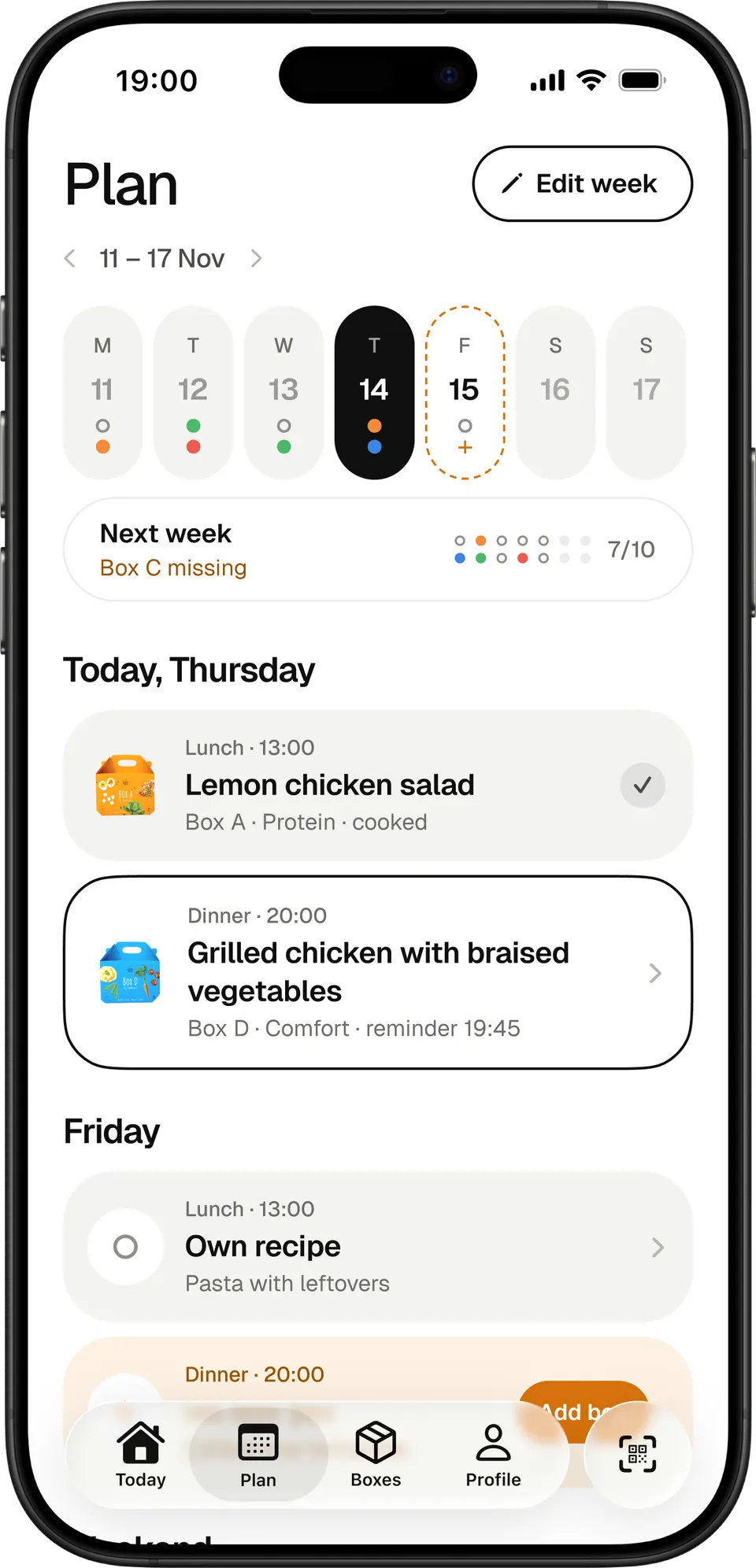
05The week
Targets for a pilot
- Food waste in the first month
- −40%
- From box to plate
- <20 min
- Users still active at day 30
- >60%
Process
Challenge
Students know what a balanced meal looks like. What stops them is the effort between intention and plate.
The brief: pick a real problem in our own community. We chose one we were living ourselves as off-site students, and desk research showed how common it is.
The project ran across three courses at the University of Trento (semiotics, sociology and psychology of communication), in a team of four. I worked on every phase, from research to packaging.
The evidence
of off-site students change their eating habits after moving out.
Source: Lupi et al., 2015 (258 students)
- Eat take-away at least once a week
- >60%
- Eat at least one portion of fruit a day
- 44%
The question
How might we make a balanced, home-cooked meal the path of least resistance for students short on time, money and kitchen space?
Research
I moved the research into students’ kitchens, where the problem actually happens.
Methods
- Survey responses
- 41
- Shared in student WhatsApp groups and through QR flyers: the broad picture.
- In-kitchen interviews
- 4
- In participants’ own kitchens, with photo elicitation: the why.
- Field observations
- 3
- The three moments that shape a meal: shopping, cooking and storing.
Analysis
Interviews and field notes were coded in one thematic grid, so a handful of visits became patterns we could compare and defend.
- Themes
- 8
- From autonomy and weekly planning to budget, shared living and food waste.
- Codes
- 36
- The same codes applied to every transcript and field note.
Insights
Four findings, each one a constraint the solution had to respect.
01Time filters everything
Frozen vegetables and ready-made burgers are a survival strategy, not ignorance. A solution has to fit fifteen to twenty minutes.
02Rigid plans break
>60%shop once a week
They shop around the days they will be in town. Day-by-day plans collapse at the first exam or trip home.
03Retail is built for families
95%blame packs too big for one
About half of the students surveyed throw food away. Of those who try not to, almost all name the same obstacle: food sized for families expires before it is eaten.
04The shared kitchen has no rules
≤3people cooking at once
The first one in gets the stove. Less prep and less counter space make cooking more likely to happen at all.
Define
Two archetypes live the same problem in opposite ways: one wants less effort, the other less waste.
The archetypes
Both are synthesised from the coded interviews and survey answers: two ends of the same problem, not two invented users.
Wants
In their words
Friction
Opportunity
The efficiency seeker
WantsLess effort
In their words“If cooking takes more than fifteen minutes or means fighting for the kitchen, I’ll take the path of least resistance.”
The conscious aspirer
WantsLess waste
In their words“I want to eat well and not waste food, but the shop is designed for families, not for me.”
Priorities
A value proposition canvas turned jobs, pains and gains into priorities.
Must-haves
What the service could not do without.
- Balanced diet
- Low cost
- Time saved
Nice-to-haves
The gains that would make it a habit.
- Variety from the same ingredients
- Predictable cooking time
Ideate
Six reframing cycles: each new framing exposed the flaw in the previous idea.
Reframing cycles
Three of the six, from the first framing to the final one.
61
6 Client–Problem–Solution cycles, one final framing.
- Cycle 01
Students who eat out
- Problem
- Meals are rarely balanced.
- Cycle 05
Students short on time
- Problem
- Cooking takes too long.
- Idea, discarded
Healthy ready-made food.
- Cycle 06 · Final framing
Off-site students, 18–28, cooking for themselves
- Problem
- Little time and limited skills make balanced, portioned meals hard to put together.
- Idea
- Pre-dosed single-portion boxes, planned through an app that keeps the week on track.
Design
Two layers that work together: the app reduces the decisions, the box reduces the effort.
The box
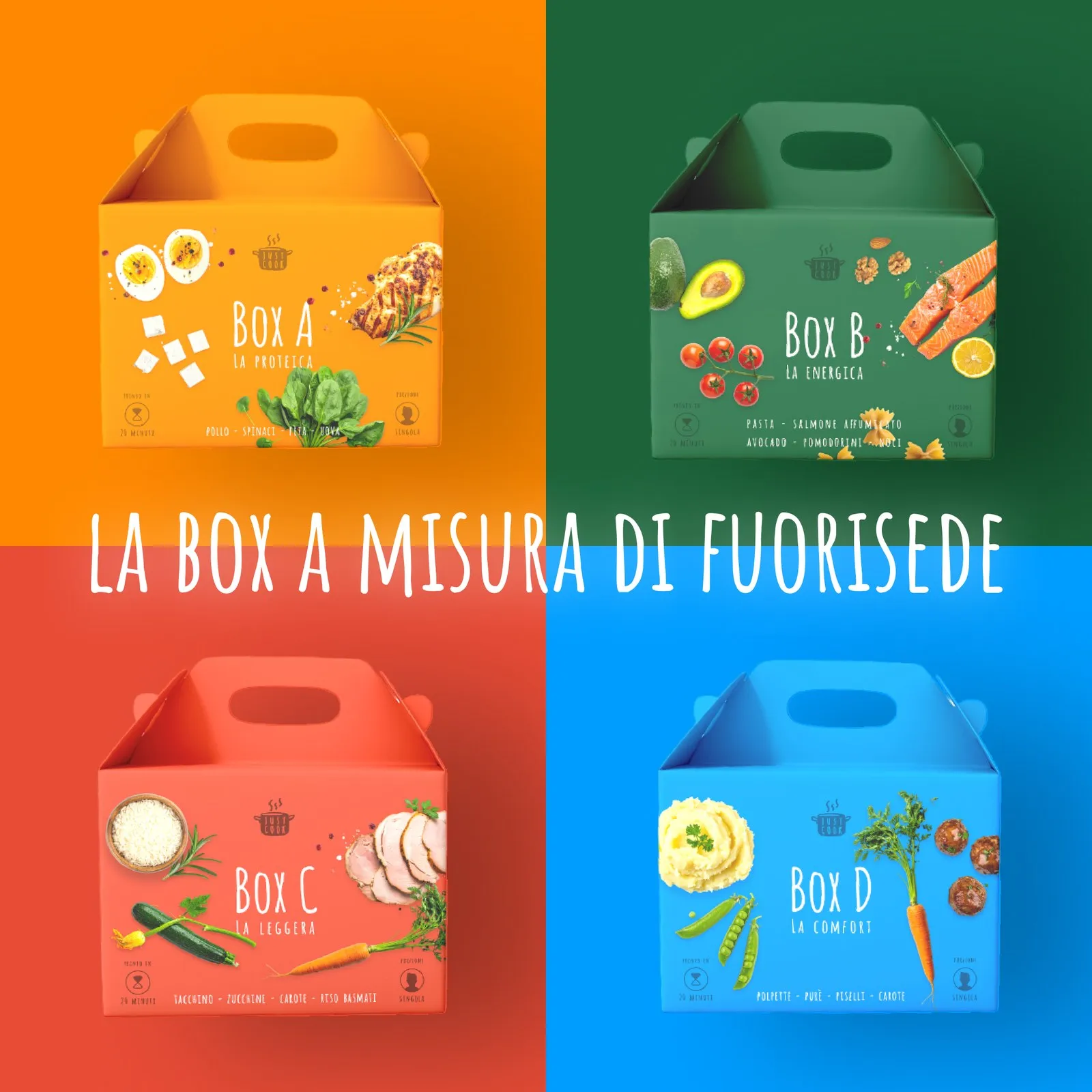
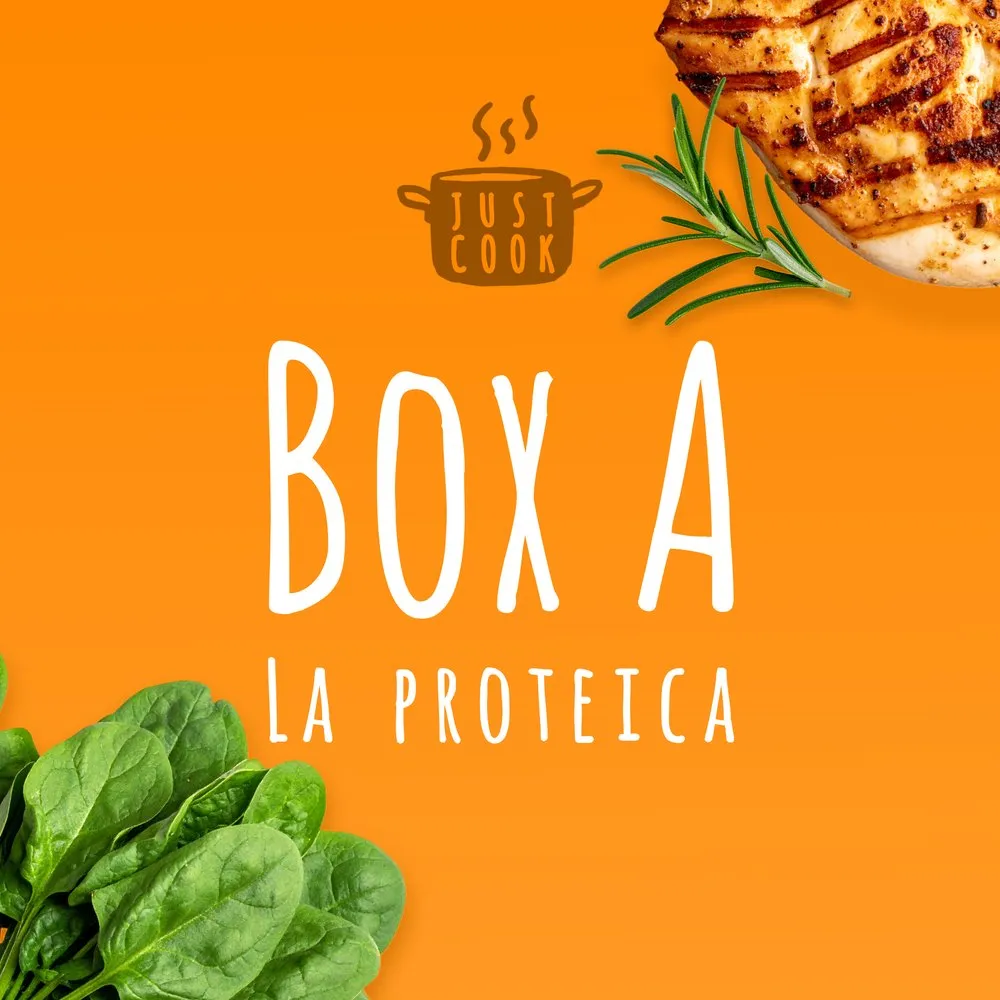
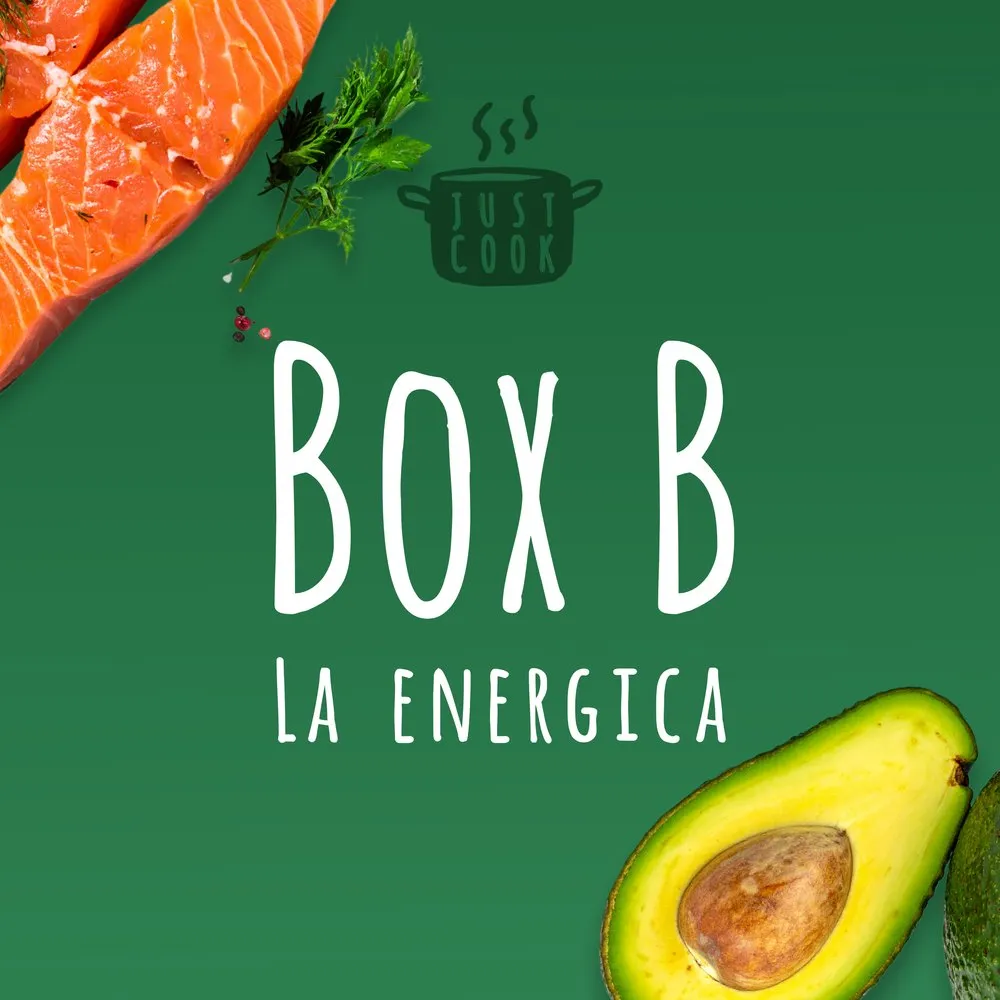
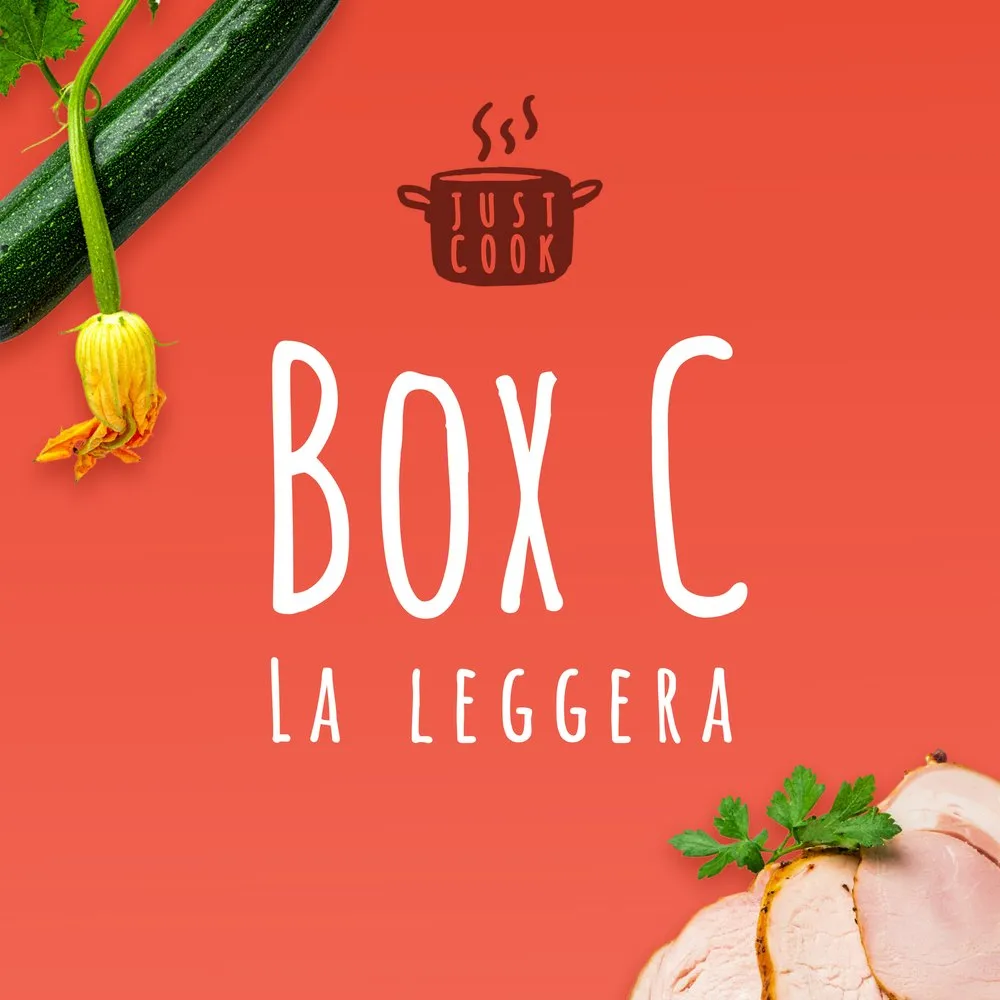
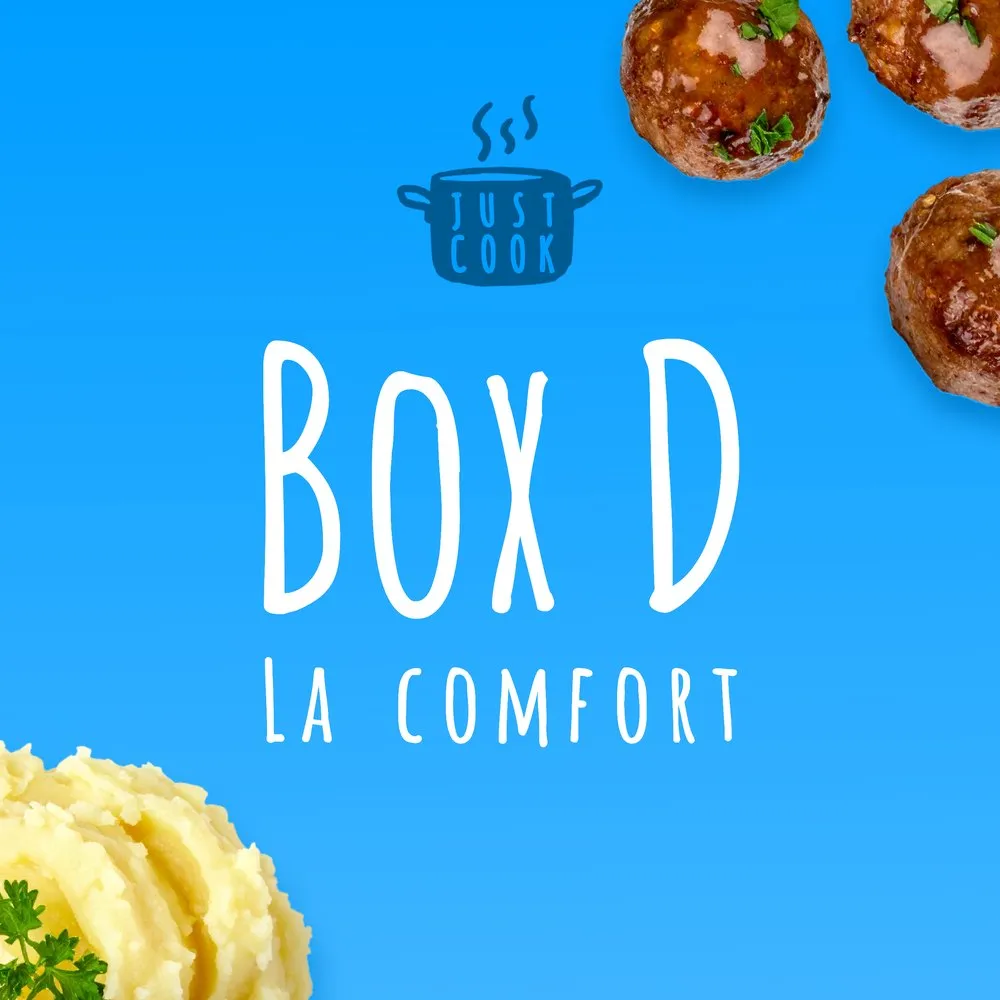
One colour per box, so the week reads at a glance on the shelf and in the app.
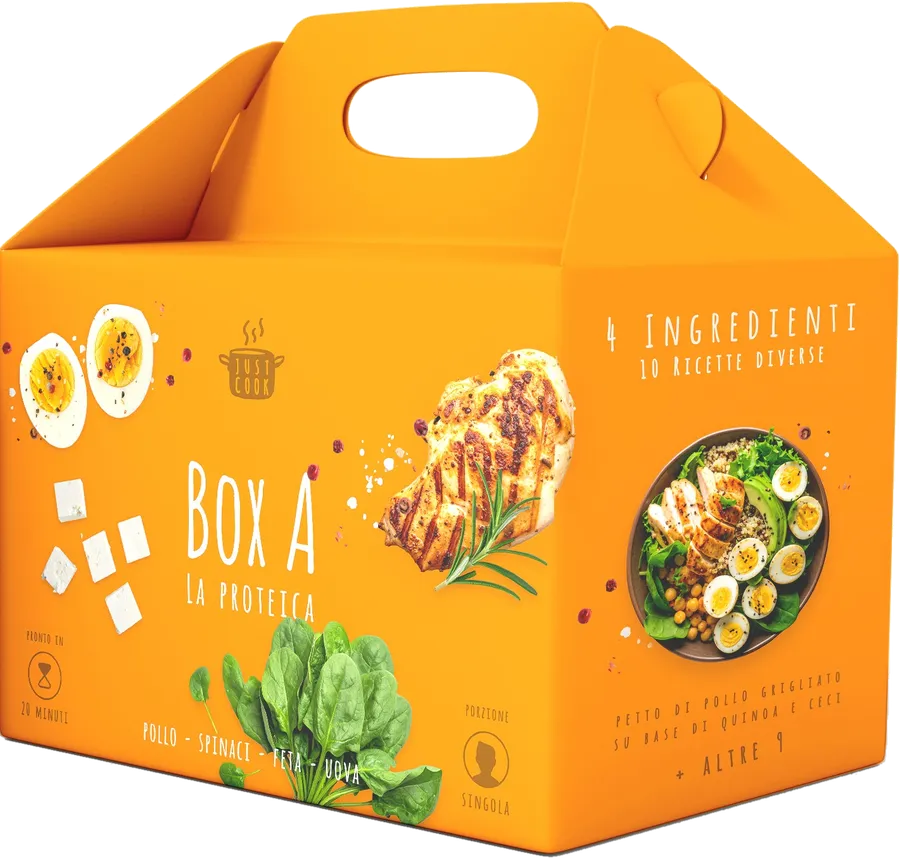
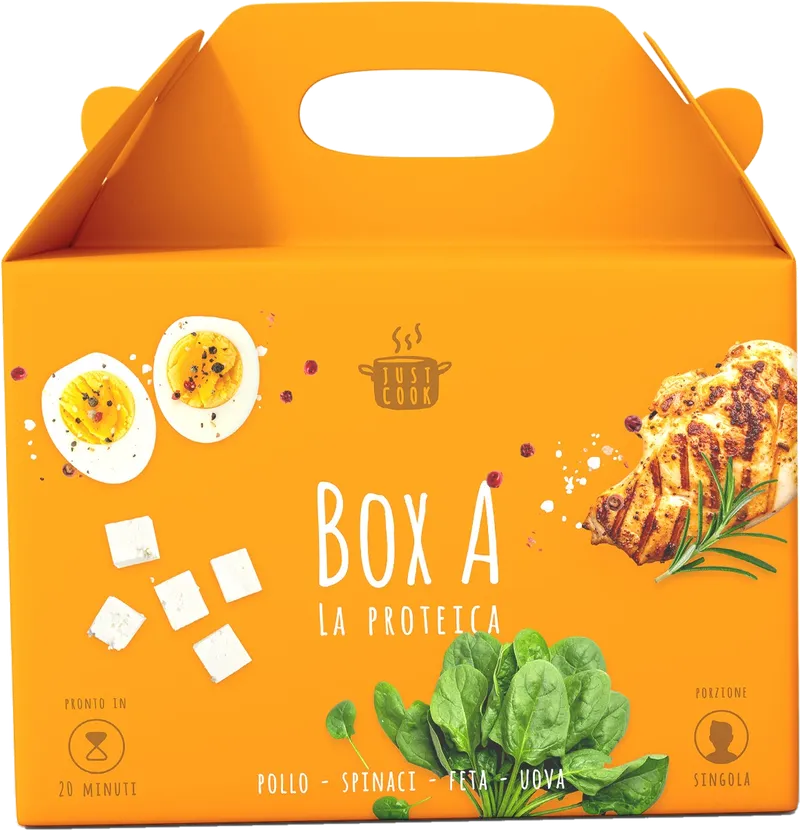
Box AProtein
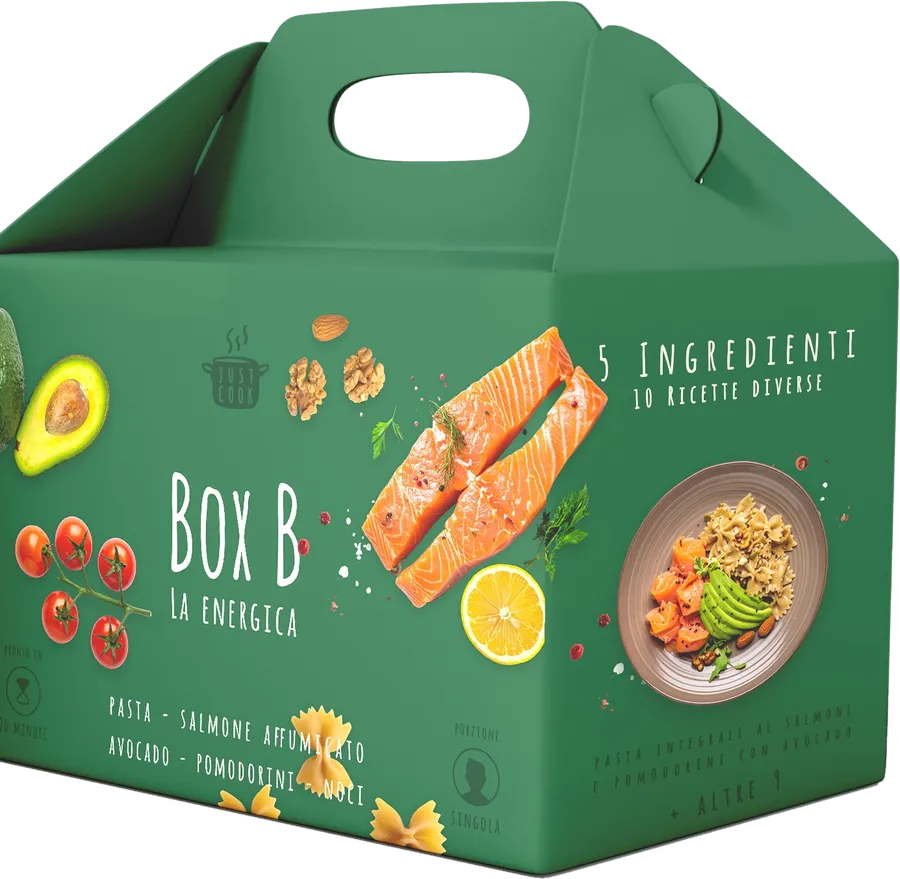
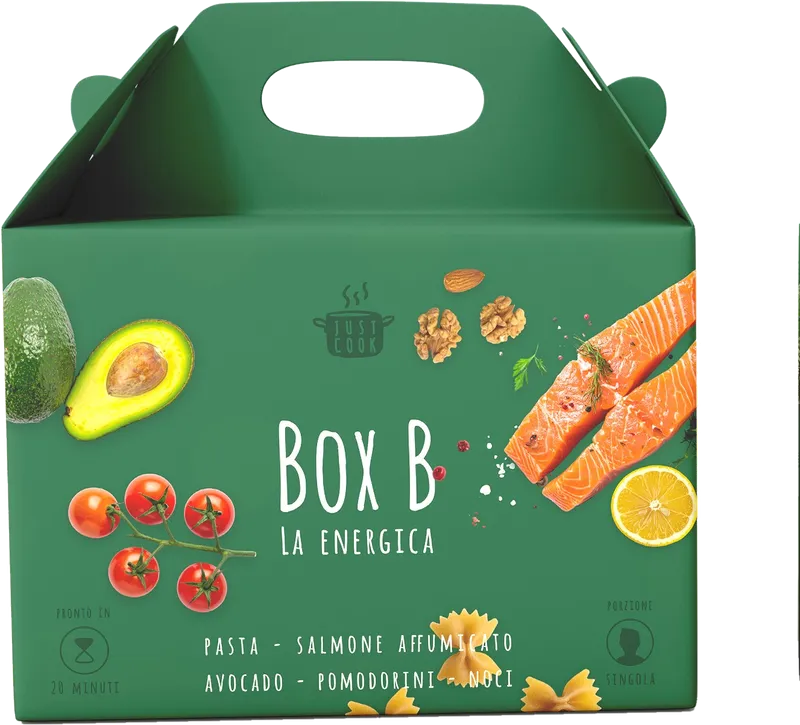
Box BEnergy
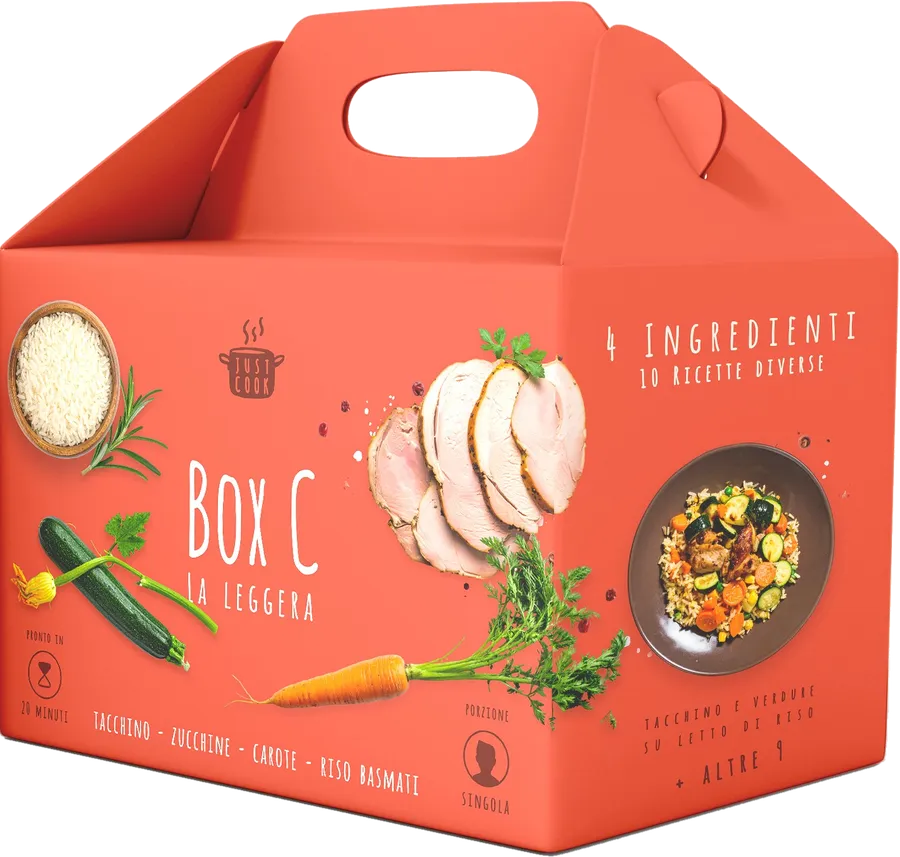
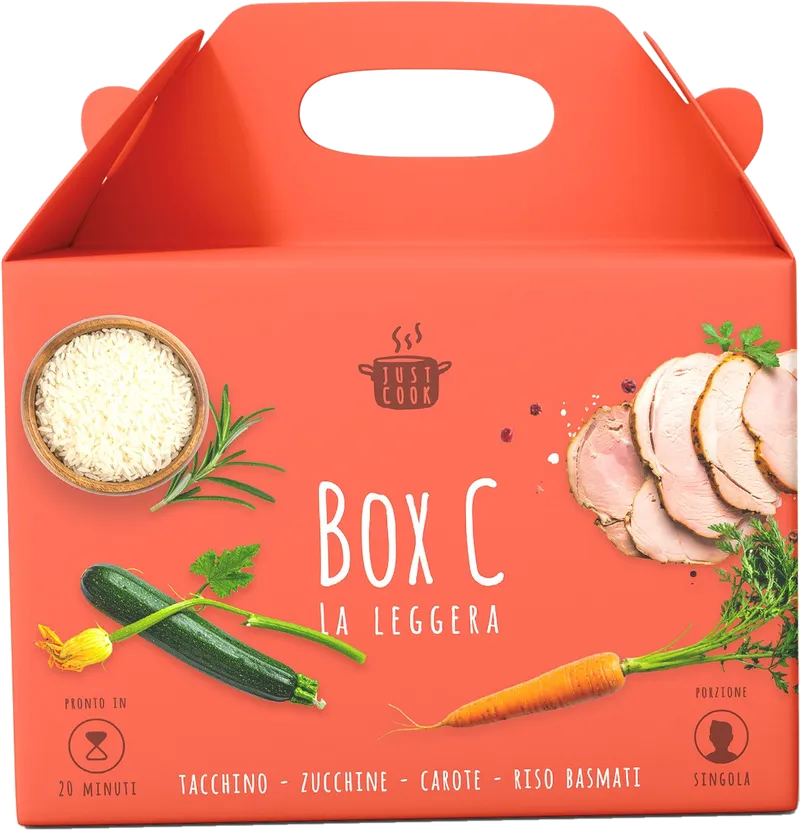
Box CLight
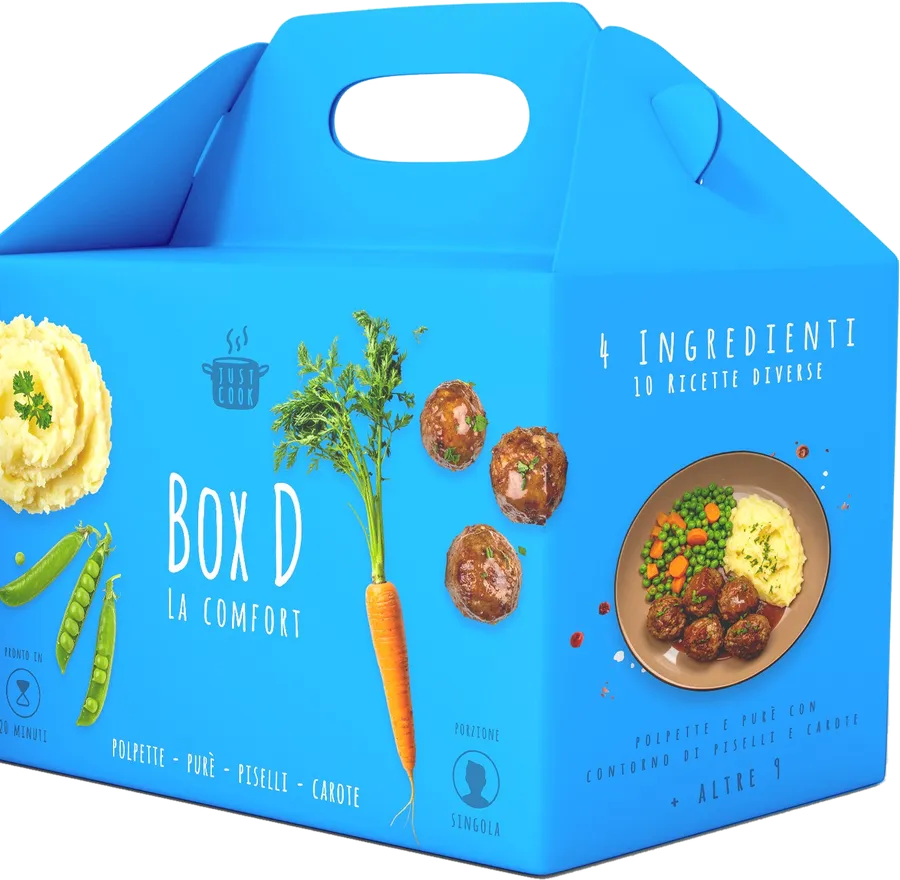
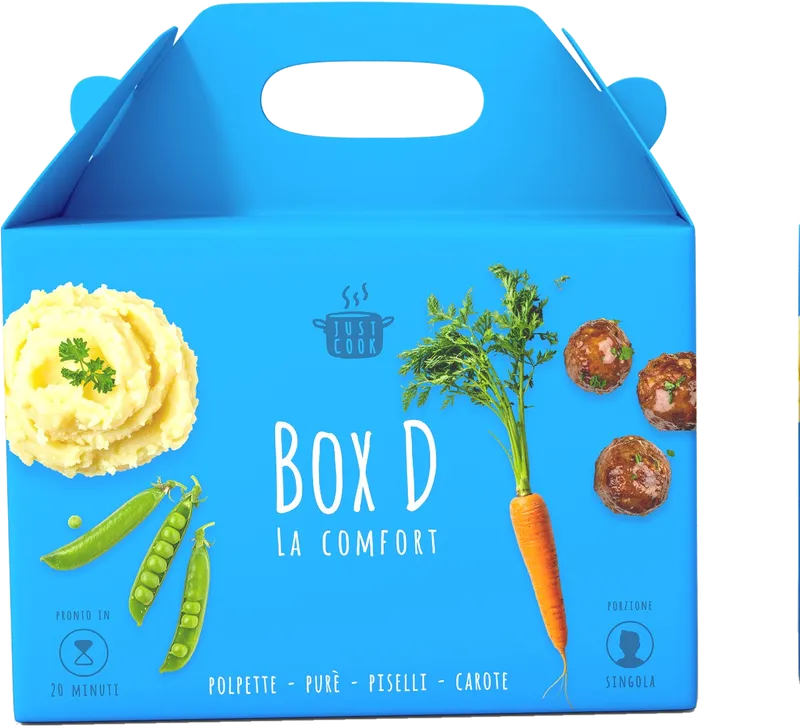
Box DComfort
- Ingredients per box
- 4–5
- Fresh and pre-dosed for one portion.
- Recipes per box
- 10
- Up to ten, so the same base never means the same dinner.
- From box to plate
- ~20 min
- Sized for the window students actually have.
In the prototype, boxes are reserved in the app and collected at Conad; a code inside each one registers it and updates the pantry.
The app
Four features, each one removing a decision from the student’s evening.
- 01
Adaptive planning
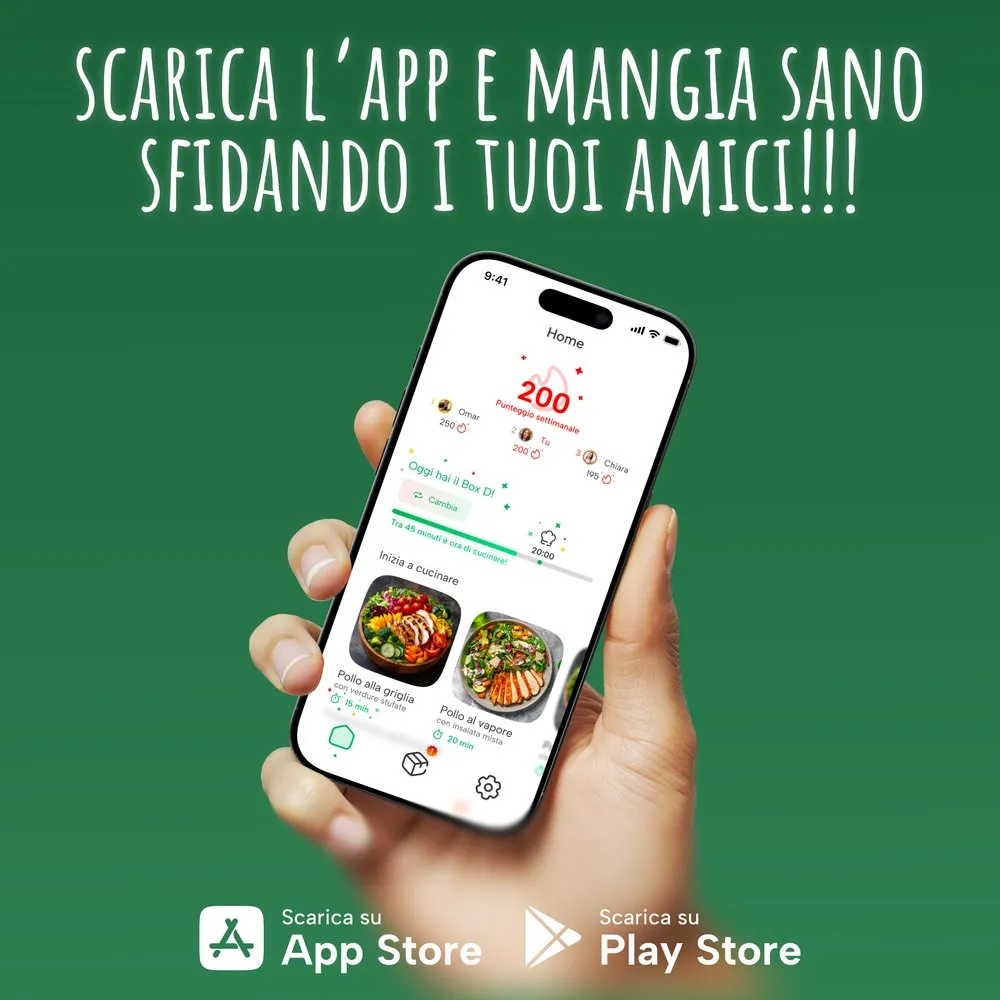
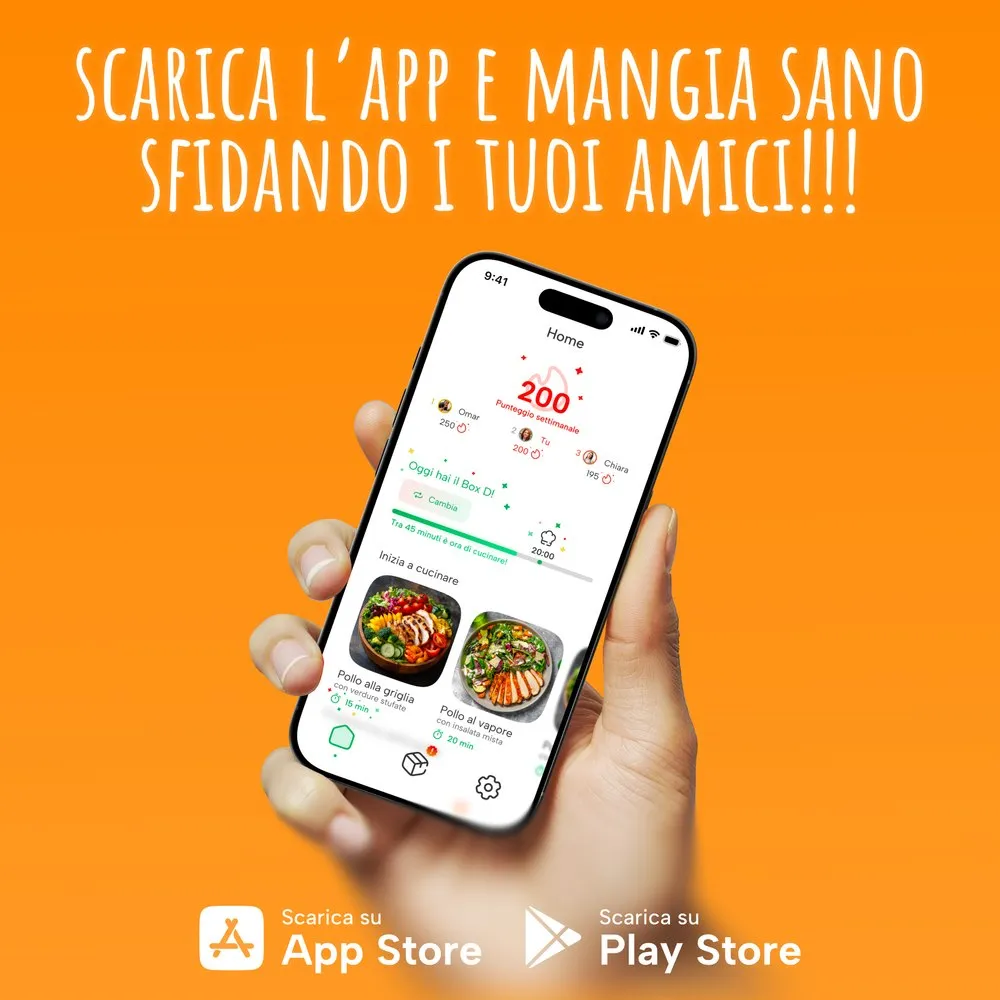
Boxes go on the days students will actually cook; the app says whether the week is covered.
- 02
A timely nudge
Reminders are timed backwards from the recipe’s duration and dinner time, before a delivery app wins.
- 03
Focus mode
Recipes play as a vertical, step-by-step video feed, a pattern students already know.
- 04
Streaks with friends
A weekly score with flatmates rewards showing up, not what is on the plate.
Brand and campaign
Delivery asks you to do nothing. JustCook asks for one easy thing.
The name winks at Just Eat. The tone is reassuring and empowering: cooking for yourself as a small act of independence in your first year away from home, not a chore.
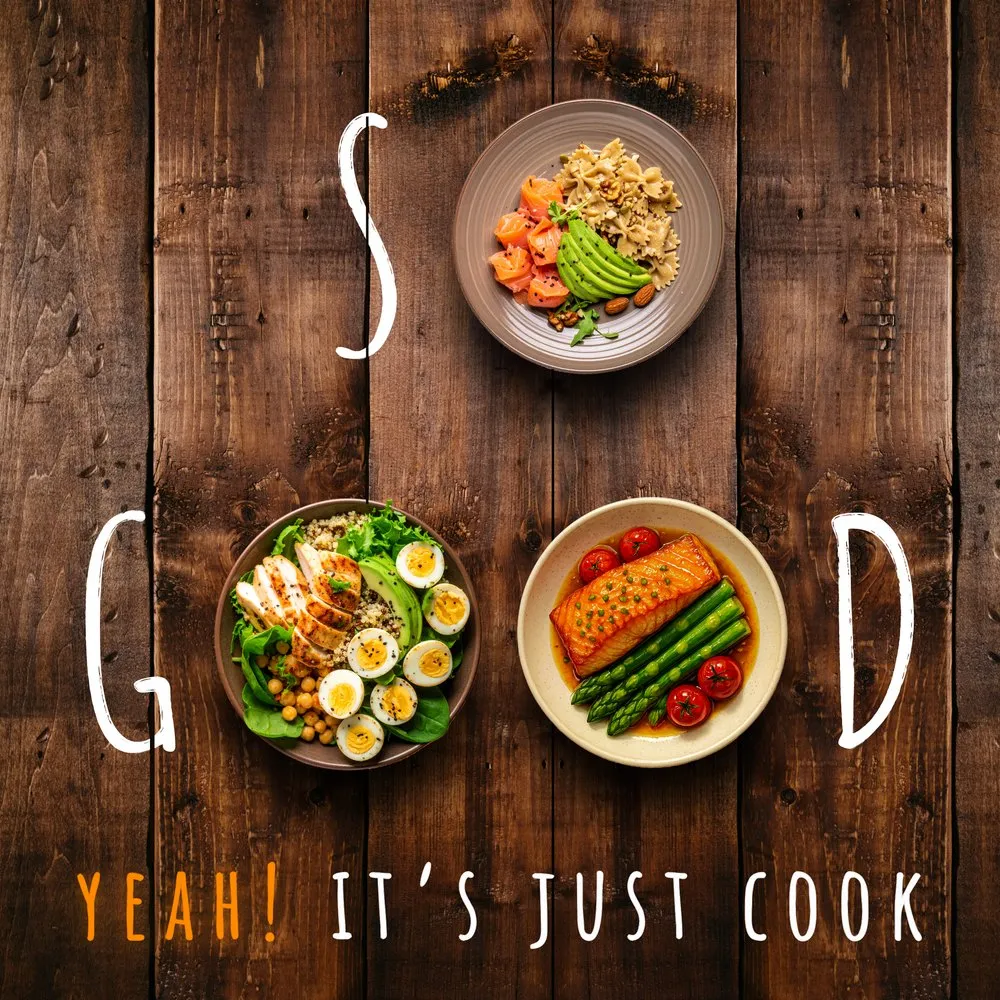
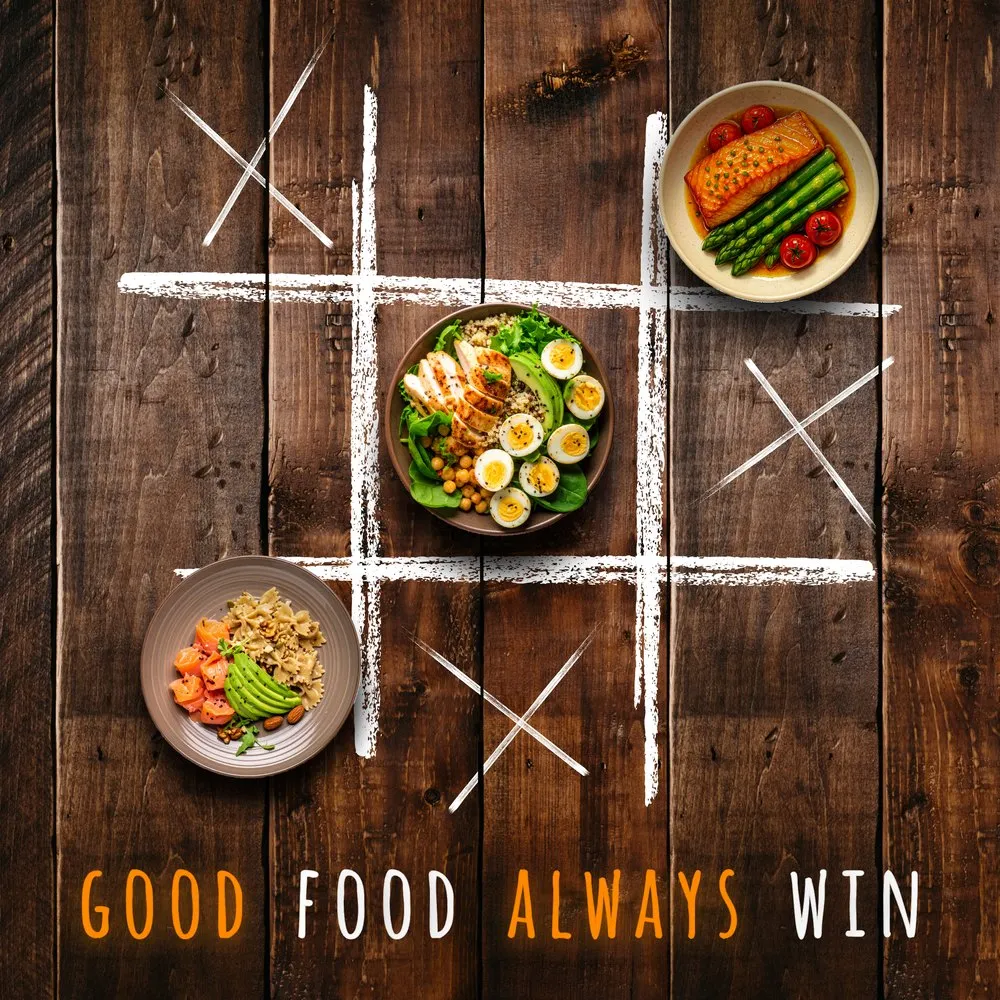
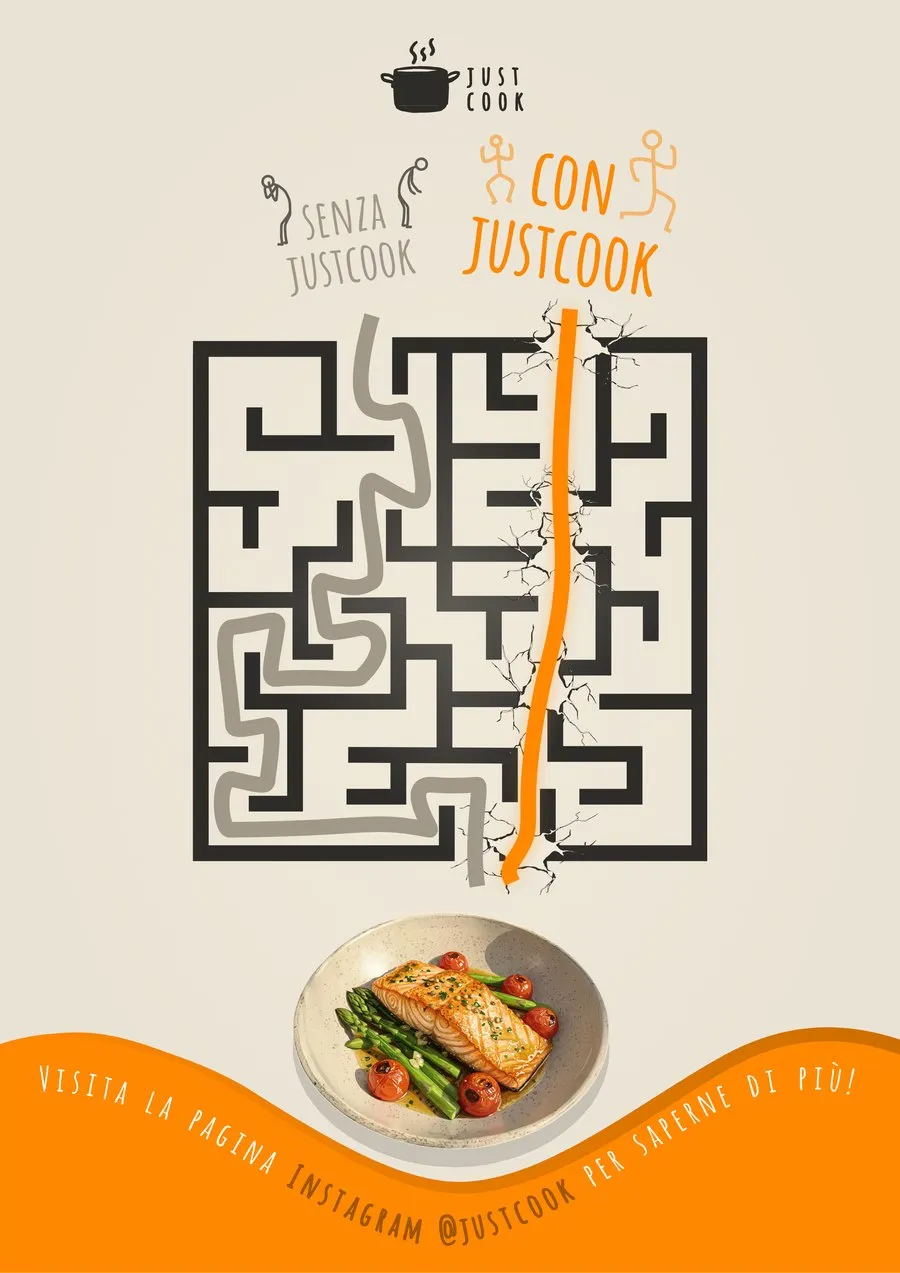
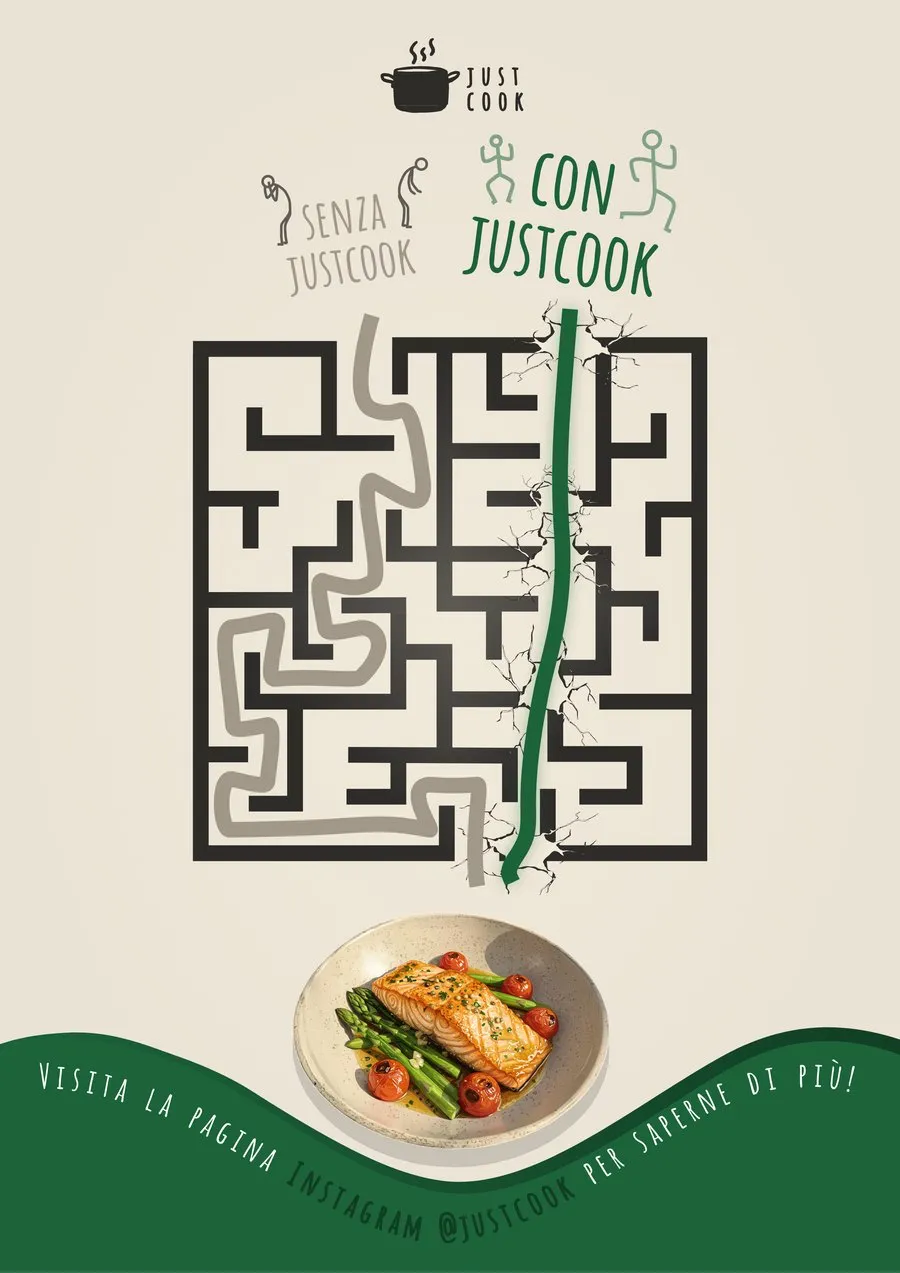
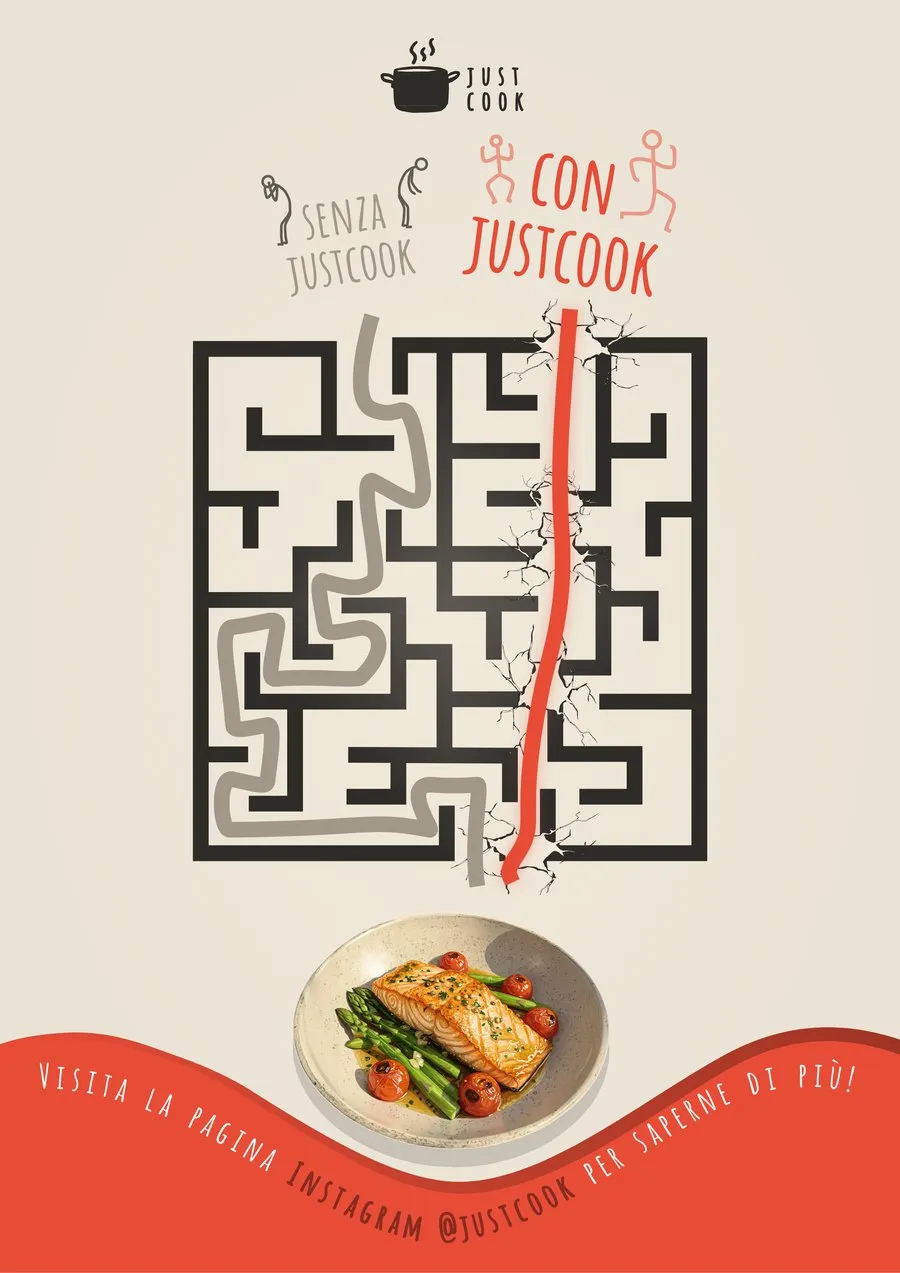
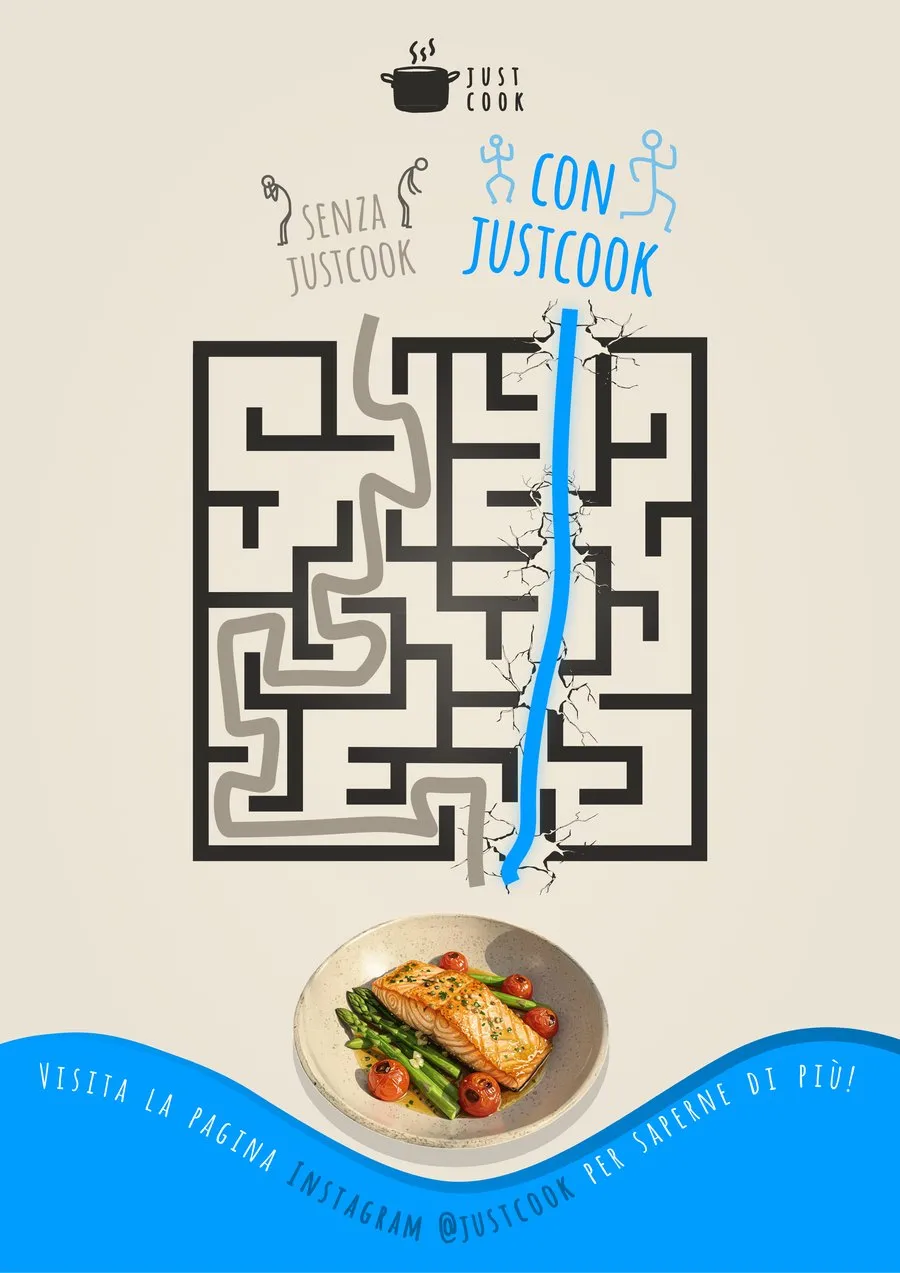
The campaign runs where students already are, and its flyers show the same maze twice: the long way and the JustCook way.
Channels
Where off-site students already spend their attention.
- 01InstagramOne post per box, and a challenge to cook against your friends.
- 02WhatsApp groupsStudent group chats: first for the survey link, then for the launch.
- 03QR flyersThe maze flyers in study rooms and student housing, with a QR code to the app.
- 04Short videosTikTok-style clips that show a box turning into dinner in twenty minutes.
01Campaign
02Flyers
Launch plan: one city first
The launch was planned small and local, where the research happened, so every box could be traced back to a student.
01One city
Rovereto, starting with the off-site students of the Department of Psychology and Cognitive Sciences: the community we researched, and our own.
02One pickup point
Boxes would be reserved in the app and collected at Conad in Rovereto, a short walk from student housing and study rooms.
03Word of mouth first
The same channels that filled the survey: student group chats, flyers in study rooms, posts that friends share and challenge each other on.
04Signals to watch
Boxes collected, codes registered, shelves emptied at the store, streaks kept: the evidence the pilot targets would be measured against.
Reflection
The most useful design decision was a reframing: changing what was easy to do, not what students knew.
What surprised me
How little the problem had to do with knowledge. The students we spoke to were not missing information: they were busy, tired and cooking in a kitchen shared with flatmates. Sitting in those kitchens taught me more than any statistic.
It was also my own problem. I was one of those off-site students, and designing for people like me made it easy to assume. The research kept correcting me, and I learned to let it.
If I started again
- Talk to more students, beyond the four in-kitchen interviews.
- Analyse what they said in a more structured way.
- Put the prototype in students’ hands before polishing it.
- Build the targets from data rather than ambition.
JustCook is still a concept, on paper and in Figma. The next version would be a tested one.
What I take with me
Design the easy path, and people will take it.